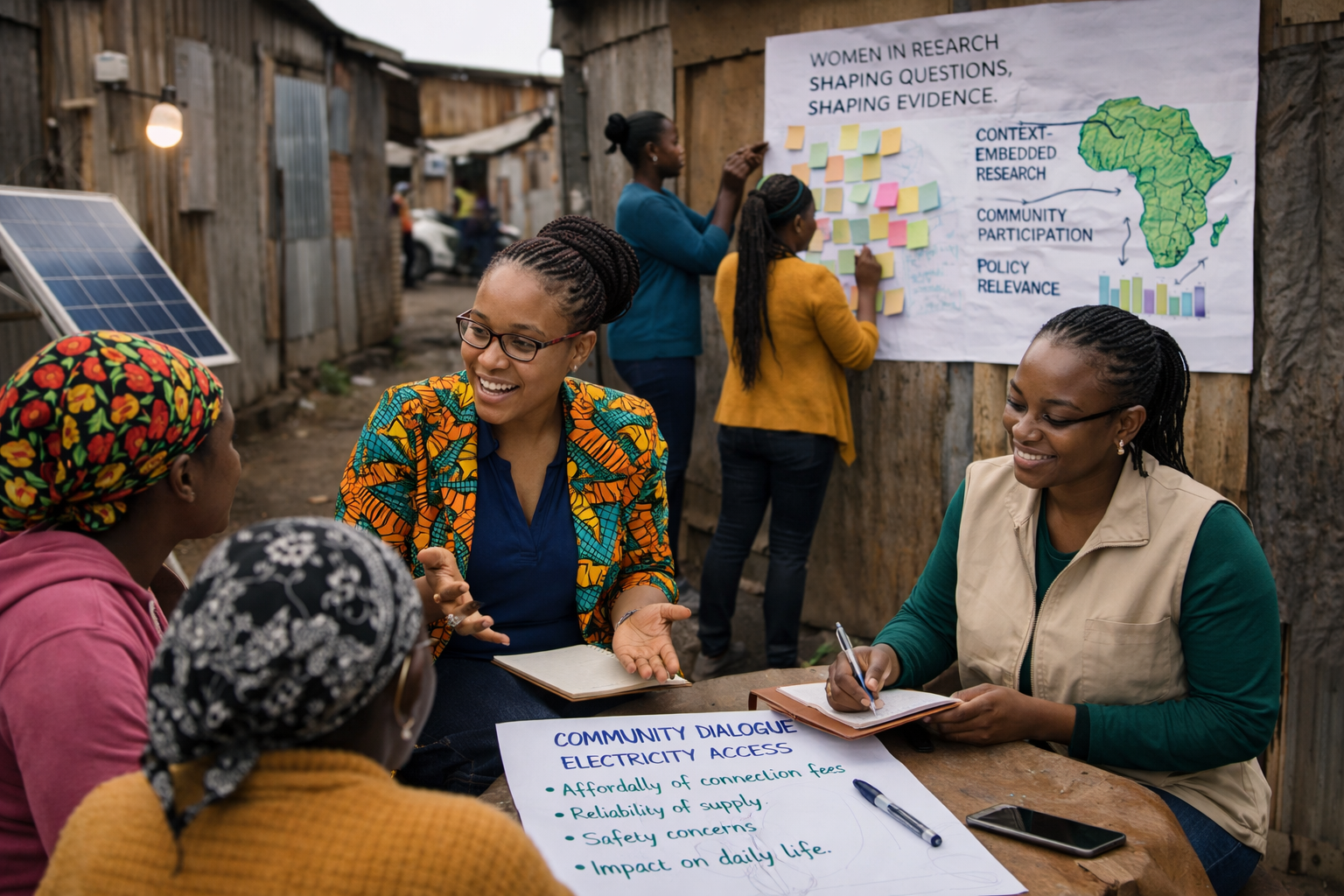

Who shapes research in Africa?
As Women’s Month comes to a close, I have been reflecting on whose voices shape the research agenda across our continent, and what is overlooked when knowledge is produced at a distance from context.
This points to a broader tension between where research priorities are set and where their consequences are felt. These are not abstract questions.
They raise three linked issues: who determines which issues are considered significant, what role women researchers play in shaping these agendas, and how these choices influence what counts as evidence.
How research practice is changing
Across sub-Saharan Africa, shifts in research practice are emerging that place greater emphasis on context. Women researchers are frequently at the forefront of these shifts, shaped in part by the conditions under which they work.
They are less embedded in well-resourced, standardised research pipelines and more engaged in interface roles between research, practice, and communities. This positioning requires adapting approaches to resource-constrained, dynamic, and often informal systems.
It contributes to a redefinition of rigour: proximity to context, sustained engagement with the systems under study, and the inclusion of communities as contributors to problem definition and interpretation, not only as sources of data.
For example, in our work on electricity access in informal settlements, early findings from structured surveys had to be revisited through community dialogues, which reshaped both the interpretation of results and the framing of policy recommendations.
Structural constraints on women researchers
The constraints facing women researchers remain structural. Ideas presented by women are often subjected to greater scrutiny, requiring repeated validation before gaining comparable traction. Authority is not granted automatically and is shaped by entrenched perceptions within professional spaces.

Dr. Elsie Onsongo is the Director of Nuvoni Centre for Innovation Research, a Nairobi-based organisation focused on inclusive development through science, technology, and innovation.
These dynamics extend beyond institutions. Women researchers continue to carry disproportionate care responsibilities alongside professional expectations.
These are not individual challenges but systemic conditions that shape who participates, who leads, and whose knowledge is recognised.
Leadership and institutional change
Through leading Nuvoni’s work across energy, urban development, food systems, and innovation, I have come to see leadership in research as the design of enabling conditions.
This requires asking specific questions: are we creating space for women to lead, or only inviting participation? Are we recognising presence without shifting decision-making power? Are we investing in development, or expecting individuals to navigate systems alone? Are institutional structures aligned with the realities of women’s lives?
Many consequential leadership decisions are not visible. They include redistributing administrative tasks so women are not disproportionately burdened, ensuring junior female researchers are present in industry forums rather than observing, and engaging funders on why context-embedded methods require longer timelines and why this reflects rigour rather than inefficiency.
Leadership also requires reflexivity, responding to feedback and adjusting systems where they fall short. A central task is to create pathways for others to progress.
At Nuvoni, this means removing barriers and ensuring that women researchers are positioned to lead and shape research agendas.
What needs to change
For policymakers shaping research funding, ethics, and national priorities, three actions are critical:
- Make exclusion visible by mandating gender-disaggregated data when commissioning research
- Reform funding and procurement by prioritising women-led research teams with clear targets and structured capacity support
- Recognise participatory and context-embedded approaches as legitimate methodologies and resource them accordingly
While progress is visible in funding calls that encourage women’s participation, gaps remain in leadership, access to resources, and influence over decision-making.

For universities and research institutions
Promotion and recognition systems need to be examined. Are women leading grants, serving on editorial boards, and representing institutions?
Moving beyond mentorship towards sponsorship is critical, where senior researchers actively recommend women for opportunities. Institutions must also address biases in how contributions are evaluated and credited, ensuring accountability in decision-making processes.
Strengthening the research pipeline
My own doctoral and post-doctoral journey was shaped by access to mentorship, networks built through conferences and networking events, and the flexibility to balance research with life beyond academia.
Targeted fellowships that combine financial support, strong supervision, and access to academic networks can make doctoral pathways more viable.
Ensuring these are accessible through flexible timelines and part-time options is essential for researchers with care responsibilities. Supporting women through doctoral training remains a direct route to strengthening research systems.
Conclusion
When I look at the women researchers at Nuvoni, I see what becomes possible when constraints are reduced. They are not only conducting research, but they are also reshaping how knowledge is produced, grounded in accountability, context, and sustained engagement.
For policymakers and research institutions, the task is to invest in structures that support women’s leadership in research and to define rigour through depth of inquiry, engagement with context, and relevance to lived realities.
When women shape research questions, research outcomes better reflect societal priorities.
Dr. Elsie Onsongo is the Director of Nuvoni Centre for Innovation Research, a Nairobi-based organisation focused on inclusive development through science, technology, and innovation.