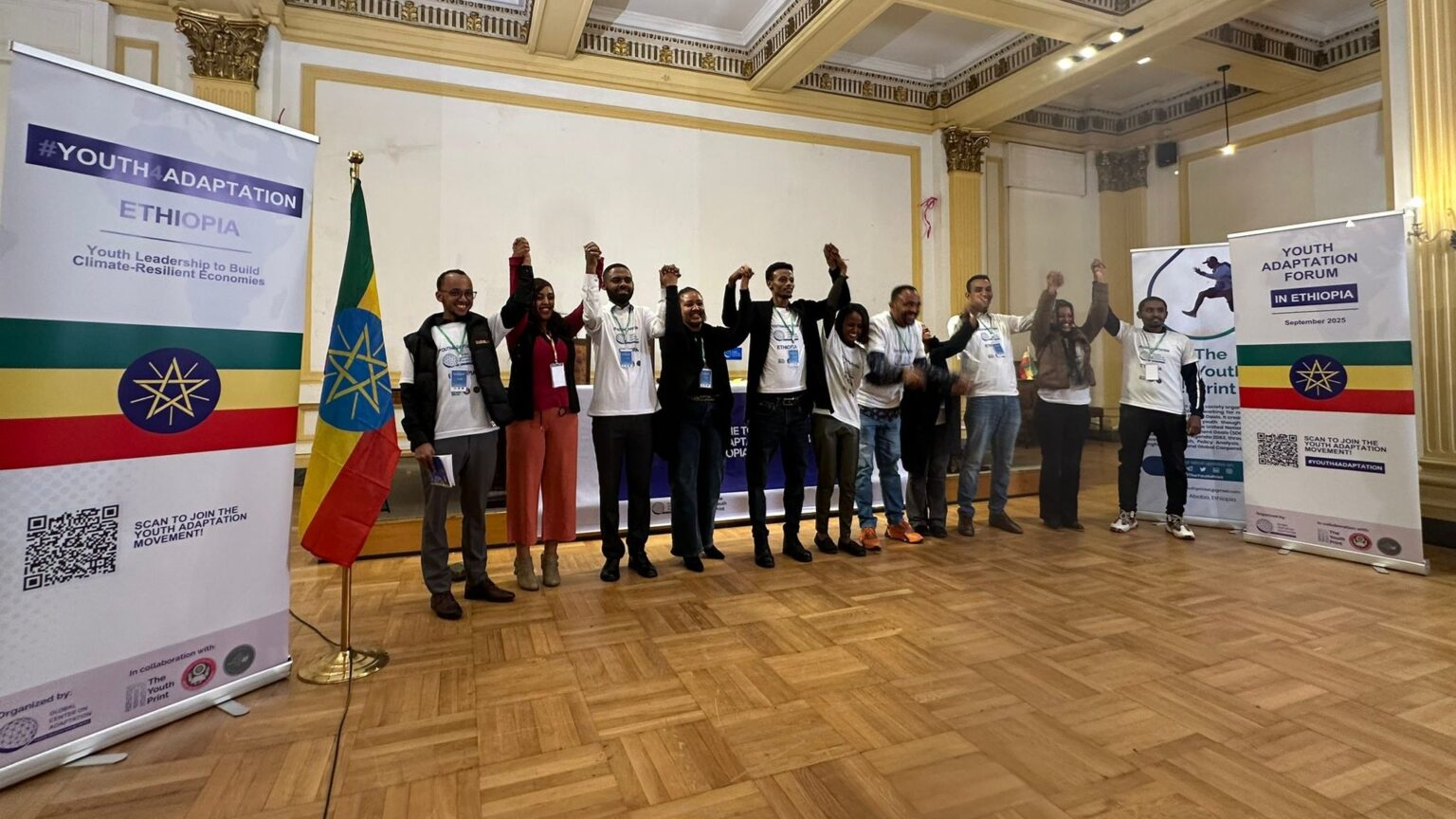

At a youth-led climate panel in Addis Ababa, the room was energized as the NextGen Forum commenced, featuring participants from diverse backgrounds.
The discussion did not question whether young people should participate in climate dialogues; that assumption was already established.
Instead, the panelists tackled deeper questions: what role should they play, how can their voices move beyond tokenistic inclusion, and what does genuine intergenerational collaboration look like in Africa’s climate efforts?
For Tesfaye, a frontline advocate and moderator of the youths’ session, the problem is not the absence of inclusive policies but the lack of follow-through.
“We are past having new policies on board. They are really inclusive. They talk about every aspect of inclusivity. However, it’s always been the implementation part. If there’s anything to push for, it would really be strengthening implementation and accountability.”
Her point echoed frustrations common among youth constituencies in the UN climate process, where declarations and communiqués proliferate from Nairobi to Addis Ababa to Bonn, yet implementation stalls. For young Africans on the climate frontlines, the challenge is not more discourse, but more action.
From Ethiopia, Feven Tsefaye, founder of Chaka Origins, argued that youth innovation can thrive when linked to community resilience.
“We source indigenous plants from Ethiopia’s biosphere reserves, ensuring smallholder farmers, most of them women, have buy-back guarantees to sustain their livelihoods. This reduces the need to cut down trees for survival.”
Her model reflects the Just Transition debates unfolding in global negotiations, which seek to align economic opportunity with climate resilience. For Sisay, youth-led enterprises are not just advocacy vehicles but also real-time experiments in building equitable and sustainable economies.
But youth voices also stress the importance of learning across generations. Mtetelenu Kalama, head of Zambia’s Ages of Change Foundation, shared how her path from a shy student to a media advocate taught her the value of humility.
“Sometimes young people think we know it all. But the older generation brings wisdom and indigenous knowledge. Trusting the process and bridging the gap is key, because very soon, we will no longer be the young people in the room.”
Her foundation’s use of radio, still the most accessible medium in rural Africa, emphasizes another global debate: how climate communication and adaptation strategies must reach vulnerable populations beyond elite conference halls.
For Joshua Amponsem, co-founder of Green Africa, one persistent myth needed dismantling: that Gen Zs are lazy and disengaged.
“Every generation worked with what they had and made our lives easier. Now we have access to tools and information that older generations couldn’t dream of. The challenge is to work together, not dismiss each other.”
Joshua pointed to the creation of the Justice Fund, which now finances over 100 youth-led climate projects in 55 countries, as proof of what intergenerational collaboration can achieve. His example also illustrates the urgent need for direct access to climate finance, a demand consistently raised by YOUNGO, the official youth constituency in the UNFCCC, but often sidelined in negotiations.
As COP30 in Belém approaches, these lessons carry weight as it’s apparent that the young people are taking hold of their future in their arms.
Evidenced by youth constituencies that are pushing for clear pathways on climate finance, particularly the new Loss and Damage Fund, and for recognition of youth-led innovation in Nationally Determined Contributions (NDCs).
Yet, as Tesfaye reminded the room, the future will depend less on the words agreed in conference halls and more on the implementation and accountability mechanisms that follow.
Taken together, the panel’s voices underline a critical truth: the role of youth in climate discussions cannot be reduced to symbolic seats at the table. It must be measured by policy implementation, direct access to resources, and the integration of youth innovation into formal climate strategies.
For Africa’s youth, the challenge is not only to be heard but to ensure their energy, creativity, and lived experiences shape decisions that will define the continent’s climate trajectory and the credibility of global climate action at large.