As the world marked the International Day of Zero Waste, a stark reality loomed large: humanity generates up to 2.3 billion tonnes of municipal solid waste each year, much of it tied to how food is produced, consumed, and ultimately discarded.
This year’s observance, led by the United Nations Environment Programme and UN-Habitat, turned its focus to food waste, placing a spotlight on what we eat, what we waste, and what it will take to build more sustainable and resilient food systems.
Even as hundreds of millions face hunger globally, more than one billion tonnes of food is wasted each year. Nearly a fifth of all food available to consumers is discarded, with households accounting for the largest share. Behind these numbers lies a deeper human cost.
“In every wasted bite lies the right of someone whose life depends on it,” said First Lady of Türkiye H.E Emine Erdoğan. “Let us not forget that all of humanity bears the cost of food loss and waste.”

Her message outlined a growing global recognition that food waste is not just an environmental issue; it is a moral, economic, and social challenge.
According to UN Secretary-General António Guterres, the path forward lies in collective action across every level of society, with a stride from individual choices to systemic change.
“This year’s International Day of Zero Waste spotlights the mounting food waste crisis, and calls on each of us to take action,” he said.
From households to governments, the solutions are both simple and systemic. Consumers can rethink shopping and cooking habits, while retailers and food businesses can optimize operations and redistribute surplus.
Cities, meanwhile, are uniquely positioned to scale solutions for the people, from organic waste separation to smarter procurement systems.
At the national level, integrating food waste into climate and biodiversity strategies is emerging as a critical step toward long-term change.
The Climate Cost of Food Waste
Beyond the social and economic toll, food waste is a major driver of the climate crisis. Food loss and waste contribute up to 10 percent of global greenhouse gas emissions, nearly five times that of the aviation sector.
Food waste alone is responsible for a significant share of methane emissions, one of the most potent greenhouse gases.

The Executive Director of UNEP, Inger Andersen, points out that at a time of accelerating climate change, we cannot afford to waste precious resources to grow food that is not eaten.
“Reducing food waste makes strong economic sense, delivers real methane cuts, supports food security, and helps build a circular, zero-waste, zero-emissions future.”
Across the globe, cities and communities are emerging as critical hubs for innovation while layering solutions that are locally based, addressing the core issues faced.
“Cities that integrate food systems, water services, and waste management show what is possible,” said Anacláudia Rossbach, Executive Director of UN-Habitat.
From recovering surplus food to turning organic waste into compost or energy, these approaches are creating circular systems that cut emissions while generating jobs. Crucially, she emphasized the role of often-overlooked actors.

“Informal workers, waste pickers, and community water managers are at the heart of these solutions,” she said. “Recognizing their contribution ensures that no one is left behind.”
Global Momentum Builds Toward a Circular Future
Since its establishment through a United Nations resolution led by Türkiye and over 100 Member States, Zero Waste Day has become a growing platform for global action.
This year’s observance saw events held from Nairobi to Osaka, from Brasília to Geneva, each exploring how food waste can be tackled not just as an individual failure, but as a shared systemic challenge shaped by culture, infrastructure, and policy.
New initiatives are also gaining traction. The “Recipe of Change,” launched by UNEP and UN Tourism, is mobilizing major hospitality players, including Hilton and Accor, to measure and reduce food waste across their operations.
Meanwhile, cities and countries are beginning to show what is possible. Japan has cut food waste by over half since 2000, while the United Kingdom has achieved significant reductions through collaboration and behavior change.
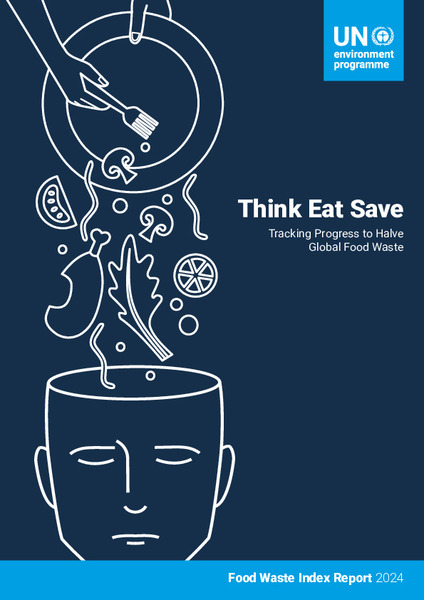
Yet, despite growing momentum, major gaps remain. Many countries still lack the data needed to track progress toward halving food waste by 2030, a key global target.
Efforts such as the Food Waste Breakthrough, launched at COP30, aim to accelerate action through better data, stronger policies, and coordinated investment. At its core, the message of Zero Waste Day is both urgent and hopeful.
Reducing food waste is not just about cutting losses; it is about rethinking value, restoring balance, and building systems where resources are used more wisely and equitably.
In a world of growing scarcity and rising demand, what we choose not to waste may ultimately define the future we build.