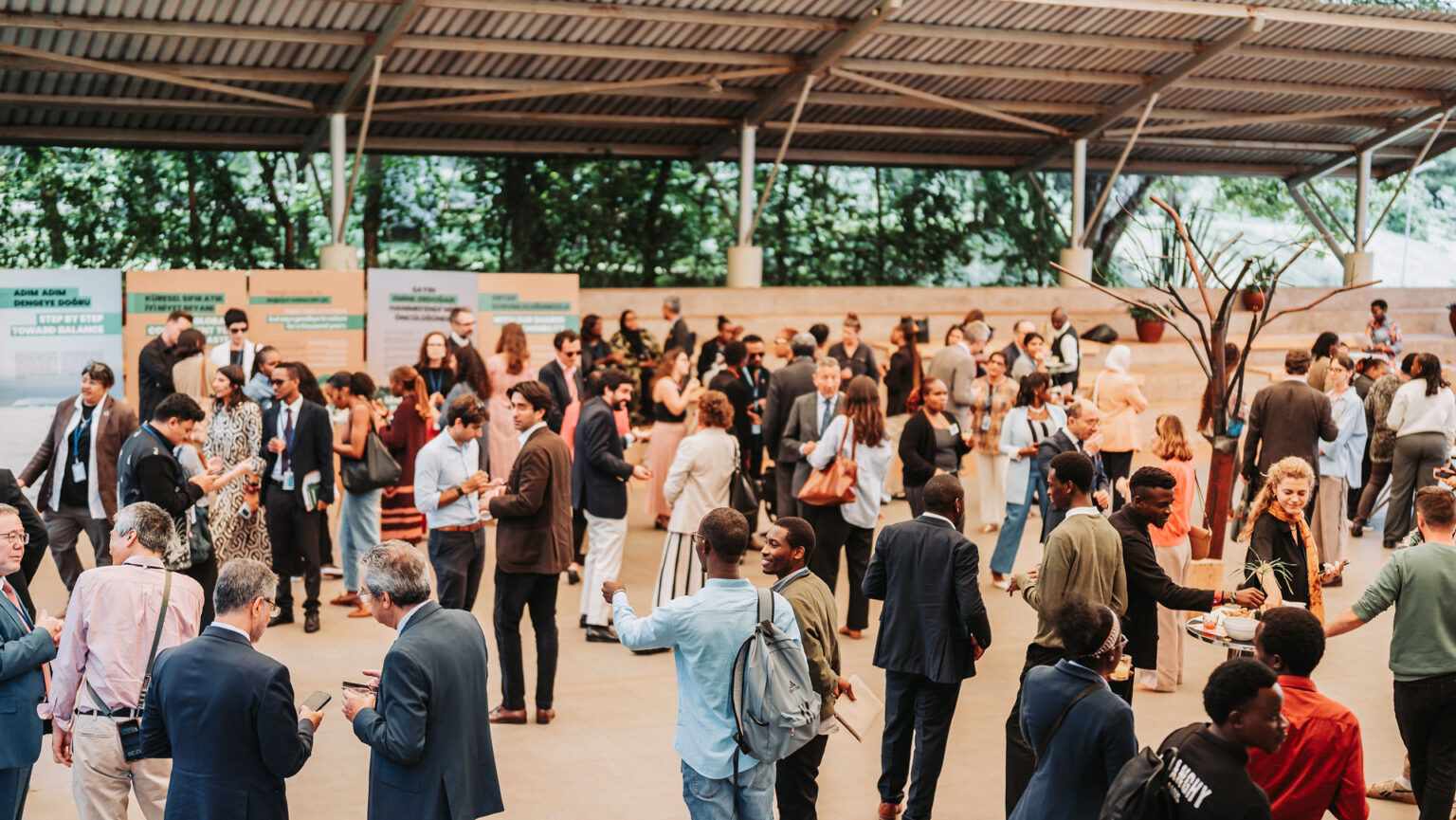

As soft music played in the background, the United Nations Environment Programme (UNEP) Zero Waste Day gathering in Nairobi came alive.
Filled with vibrance, from the diversity of people to fabrics and meals, the message was clear from the very first moment: waste is not the end of a story, but often the beginning of another.
Opening the session, UNEP Global Communications Lead Keishamaza Rukikaire gestured toward the room itself as a living example of that philosophy, highlighting the power of recycling and reuse.

“The posters around you have been created using water hyacinths, an amazing waste transformed into something functional and beautiful,” she said, pointing also to a panel backdrop constructed from repurposed old doors.
Echoing the message of looking beyond waste as a finality, “A reminder that someone’s waste can be several things.”

That tone, practical, creative, and quietly radical, carried through the day’s conversations, where artists, entrepreneurs, and food system innovators reimagined waste not as a burden, but as an untapped resource.
Zero Waste Day Reframes “Imperfect Produce” Through Art
For Yvonne Endo, co-founder of EndoSquared, the challenge of working with imperfect produce that is often discarded as waste turned into an artistic awakening.
Standing beside a striking tablescape made from surplus fruits and vegetables, Endo described how the experience pushed her beyond familiar creative boundaries.

“I’m usually a florist. I’ve never worked with fresh produce before,” she said. “It encouraged me to think outside of the box.”
Her work treated bruised or irregular produce with the same care as flowers, arranged through form, texture, and pattern. The result blurred the line between what is considered waste and what is considered art as attendees sampled the dishes on display.

“Once items are used with intention, you’ll be able to see value in them,” she explained. “When you pair them with beauty, you start to see them in a different light.”
It was a subtle but powerful reminder: perception often determines value as much as condition does.
A Reflection on the Hidden Cost of Food Loss
Across sub-Saharan Africa, up to half of fruits and vegetables never reach the market. Behind that statistic lie familiar challenges: poor logistics, inefficient distribution systems, and pricing structures that disadvantage smallholder farmers.

Beyond food systems, artists at the event also explored waste through broader cultural and environmental narratives.
Showcasing his art at the event was Adlan Yousif, a Sudanese contemporary sculptor who transforms scrap metal into stories of war, displacement & survival.
His art installation illustrates a tree as a source of the vast amount of food we consume on the planet and the importance of protecting and conserving it as we restore it.

His installation, illustrating a tree as a source of the food we consume, was created using recycled materials, an effort to rethink what we discard and how art can restore meaning and life to it.
“Zero waste starts on your plate, and extends into how we see the world,” said Adlan.
While creativity reshapes perception, systemic barriers continue to drive waste across the food chain. For Zara Benosa, co-founder of Farm to Feed, the issue is deeply practical and urgent.
“The reality is this has real negative impacts on the livelihoods of the farmers we work with,” she said, noting the environmental consequences as well.

According to Zara, a lot of the barriers are practical reasons, starting with the difficulty of efficiently getting that food from where it’s grown to one’s plate.
Farm to Feed is working to close that gap through technology, digitizing food rescue systems, improving price transparency, and linking farmers directly to buyers, from schools to commercial kitchens.
A model that is increasingly proving viable and productive. However, Benosa emphasizes that technology alone is not enough.

“It’s about working together practically, not just words,” she said. “And using creativity, especially in how we source and use food ingredients, so we are less wasteful.”
A conversation on Changing Habits in the Kitchen
During the discussions that arose, short conversations among attendees of the Zero Waste Day revealed that supply chains are just one side of the equation, while consumer behavior is the other.
For restaurateurs like Chloe of The Fig & Olive, reducing food waste begins with decisions made long before a meal reaches the table, as she emphasized the urgency of addressing food waste.
“Probably money is one of the biggest motivators for people to waste less food,” she admitted. Other than that, she argues that beyond cost, the responsibility lies with those who shape dining experiences.

“We need to be more creative, make food waste more delicious, more appealing, and show people that these products can be incredibly desirable.”
One of the simplest yet most overlooked solutions, she noted, is menu design.
“Menus that are 15 pages long just don’t make sense,” she said. “There’s no way you can serve everything fresh, consistently, without waste.”
At her restaurant, a deliberately small menu helps maintain quality while minimizing surplus, an approach that challenges the assumption that more choice is always better.
Zero Waste Day Calls for a Shared Responsibility
Throughout the event, a common thread emerged: waste is not just a technical problem; it is cultural, behavioral, and deeply human.

From repurposed materials to reimagined meals, the Zero Waste Day conversations highlighted how solutions lie at the intersection of creativity and systems change.
Artists like Endo are shifting how people see waste, while innovators like Benosa are transforming how systems handle it, and chefs like Chloe are redefining how people consume it.
Together, they point toward a more circular future, one where value is not lost, but rediscovered.
As Rukikaire’s opening reminder echoed through the day, the takeaway was both simple and profound: what we choose to discard may still hold extraordinary potential, if only we learn to see it differently.