By using this site, you agree to the Privacy Policy and Terms of Use.
Accept
Green Print ReportGreen Print ReportGreen Print Report
Font ResizerAa
  • Home
  • News
  • Climate
  • Renewable Energy
  • Biodiversity
  • Contact US
Reading: From Presence to Power: Women Driving the Future of Conservation in Kenya
Font ResizerAa
Green Print ReportGreen Print Report
  • Home
  • News
  • Climate
  • Renewable Energy
  • Biodiversity
  • Contact US
Search
  • Home
  • News
  • Climate
  • Renewable Energy
  • Biodiversity
  • Contact US
Have an existing account? Sign In
  • Home
  • News
  • Climate
  • Renewable Energy
  • Biodiversity
  • Contact US
© The Greenprint Report. All Rights Reserved.
women in conservation
WildLife

From Presence to Power: Women Driving the Future of Conservation in Kenya

Editorial Desk
Last updated: 2026/03/02 at 6:30 PM
By Editorial Desk 4 Min Read
Share
4 Min Read
SHARE

On a Monday afternoon at the Global Conservation Tech and Drone Forum, the applause was more than ceremonial, symbolizing how the women in conservation are leading transformation.

Opening the session, Arnolda Shiundu, chairperson of Kenya Wildlife Trust, pointed out that this is not just a gathering, but a decision to be at the table while making an impact.

The Women in Conservation Forum challenged a familiar phrase: women need a seat at the table with speakers revealing that further that being invited to sit is not the same as being heard. Ms. Shiundu added that being heard is not the same as shaping decisions.

In conservation, the table determines budgets, land use planning, technology investments, and policy direction. If women are implementing projects but absent from funding rooms, procurement committees, and governance boards, then, as Shiundu warned, they are not at the table that truly matters.

Across Kenya and Southern Africa, women conservationists are pushing beyond visibility toward structural influence in science, veterinary medicine, aerial surveillance, artificial intelligence, and human-wildlife conflict mitigation.
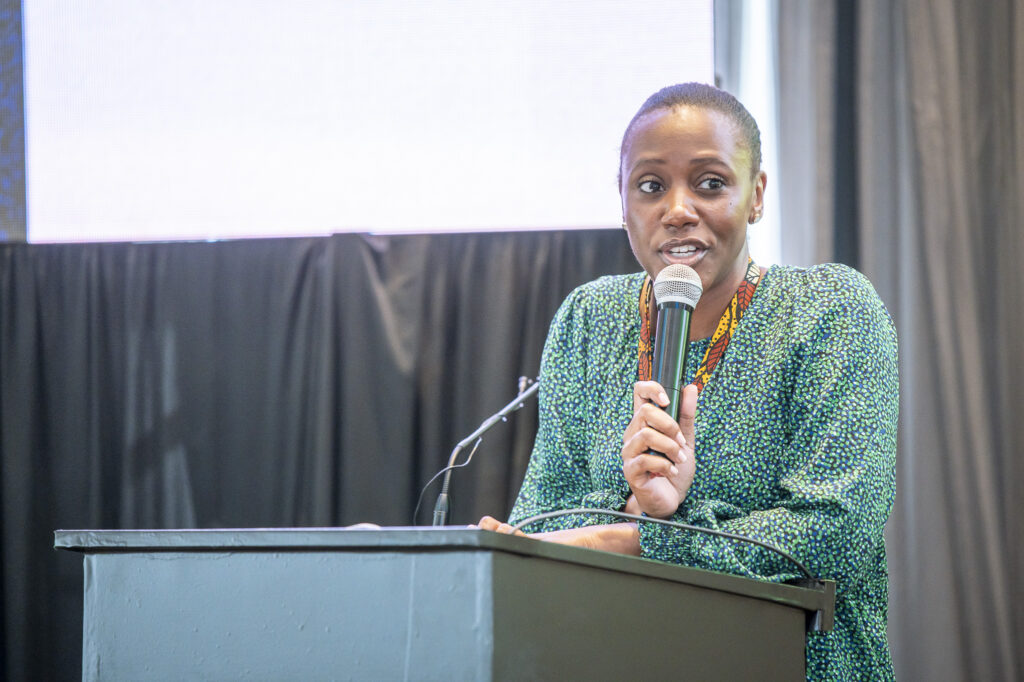
women in conservation
Arnolda Shiundu, chairperson of Kenya Wildlife Trust

Technology at the Frontline of Co-Existence

At the center of the discussion of the Global Conservation Tech and Drone Forum, themed technology in service for nature, it became clear that the intersection of conservation and technology is essential for efficiency.

Researchers from the Mara Elephant Project outlined how drones, geo-fencing collars, and data systems are transforming elephant monitoring across the Greater Mara ecosystem. Revealing that times are evolving quickly since a decade ago, poaching was the primary threat, while right now the crisis is human-wildlife conflicts.

“The human population is increasing, the elephant population is increasing, but land is not increasing,” explained Sylvia Nyarangi Ondabu, a drone pilot and researcher with the Mara Elephant project.

women in conservation
Sylvia Nyarangi Ondabu is a drone pilot and researcher with the Mara Elephant project.

As space shrinks, human-wildlife conflicts have intensified, as evidenced by crop destruction, property damage, and fatalities, which have risen as elephants move through farms and settlements in search of food and water.

Notably, how technoogy especially the embrace of drones, has eased the safeguarding of wildlife since traditional ground patrols often struggled with early detection, a case that drones have changed that equation.

Sylvia gives details that when a community hotline receives a report, teams deploy aerial units equipped with thermal imaging and speakers to locate and redirect elephants before damage escalates. “We have adopted Geo-fencing collars on selected elephants that trigger alerts when animals approach farms, enabling rapid response from ranger teams,” said Sylvia.

According to project data shared during the forum, drone-assisted interventions have significantly reduced crop damage incidents and accelerated response times.

“Technology has really aided conservation in a big way,” said Dr. Vanessa Mukami, a veterinary doctor at the Kenya Wildlife Service (KWS).

“It helps us assess terrain, locate injured animals, and plan interventions more effectively.”
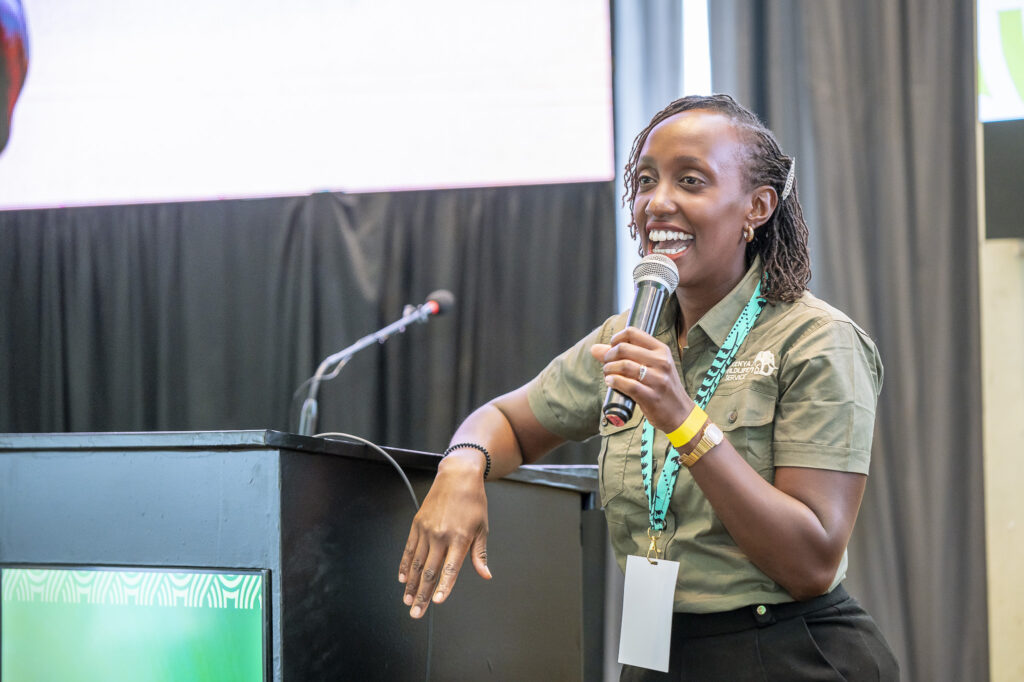
women in conservation
Dr. Vanessa Mukami, a veterinary doctor at the Kenya Wildlife Service (KWS).

For veterinary teams treating elephants injured by arrows or spears during conflict incidents, aerial surveillance can mean the difference between life and death, as it enables direct pinpointing of the locations and urgency.

Yet speakers cautioned that technology alone is not the solution.

“Technology is not neutral,” added Arnolda Shiundu, “It reflects the priorities of the people who design it. If women are not shaping what problems are prioritized and how systems interact with communities, we risk building systems that overlook realities on the ground.”

You Might Also Like

GCTDF: Inside Kenya’s Tech-Driven Conservation Reset

In Kenya, Women Are Redefining the Future of Conservation

ILRI Livestock Monitoring App Revolutionizes Smallholder Farming

Bees at Risk of Extinction

Combating Invasive Proposis Juliflora ‘mathenge’ in Baringo South

TAGGED: GCTDF, Global Conservation Tech and Drone Forum
Editorial Desk March 2, 2026 March 2, 2026
Share This Article
Facebook Twitter Email Copy Link Print
Leave a comment

Leave a Reply Cancel reply

Your email address will not be published. Required fields are marked *

Weekly Newsletter

Subscribe to our newsletter to get our newest articles instantly!


Also Read

GovernanceNews

Nature loss is now a boardroom issue, African company directors told

Company boards across Africa are being urged to put nature-related risks at…

By Editorial Desk 6 Min Read
AviationBusiness

Turkish Airlines Taps Çelebi Aviation as Nairobi Cements Its Role as an East African Aviation Hub

Nairobi's Jomo Kenyatta International Airport (JKIA) is adding another major carrier to…

By Editorial Desk 3 Min Read
Sports

Sevens Rugby’s Best Weekend Yet: Inside a Wild Two Days in Kisumu

There's a version of this story where KCB simply win. They arrived…

By Editorial Desk 5 Min Read

More Popular from GreenPrint Report

UNEA-6
ClimateSustainability

UNEA-6 Sparks Global Collaboration for a Sustainable Future

By Editorial Desk 4 Min Read
UNEA-6

UNEA-6 Sparks Global Collaboration for a Sustainable Future

By Editorial Desk
new collectoive quantified goal
ClimateSustainability

New Collective Quantified Goal as a Future Financing Solution

By Editorial Desk 4 Min Read
- Advertisement -
Ad image
ClimateSustainability

Enhancing Disaster Preparedness, Resilience in Madagascar

Cheneso marked the onset of the seasonal tropical cyclones disaster in Madagascar in January 2023, being…

By Editorial Desk
ClimateSustainability

Desert Locust a Probable Threat in IGAD Region

The 65th Greater Horn of Africa Climate Outlook Forum (GHACOF), which took place over two days…

By Editorial Desk
ClimateSustainability

Desert Locust a Probable Threat in IGAD Region

The 65th Greater Horn of Africa Climate Outlook Forum (GHACOF), which took place over two days…

By Editorial Desk
ClimateSustainability

Climate and Clean Air Initiatives Advances in the CCAC Ministerial Meeting

Climate and Clean air initiatives are vital to enhance regional coordination, foster private sector engagement and…

By Editorial Desk
ClimateSustainability

President Ruto Emphasizes Need for Action on Climate Crisis at Hand

President Ruto is on frontline championing Climate action rather than more climate talks when the situation…

By Editorial Desk
Green Print Report

The Greenprint Report is an independent, Kenya-focused online news platform that reports on sustainability and development issues. The goal is to inform, inspire, and engage readers with credible stories covering environmental conservation, climate change, and green innovation.

Contact:
Editorial Team: editor@greenprintreport.co.ke
Cell: +254 725 358401

Editorial Team: editor@greenprintreport.co.ke

Categories

  • Home
  • News
  • Climate
  • Renewable Energy
  • Biodiversity
  • Contact US

Quick Links

  • My Bookmarks
  • Customize Interests

The Greenprint Report © 2025. All Rights Reserved. Powered by Afritech Media

Welcome Back!

Sign in to your account

Lost your password?