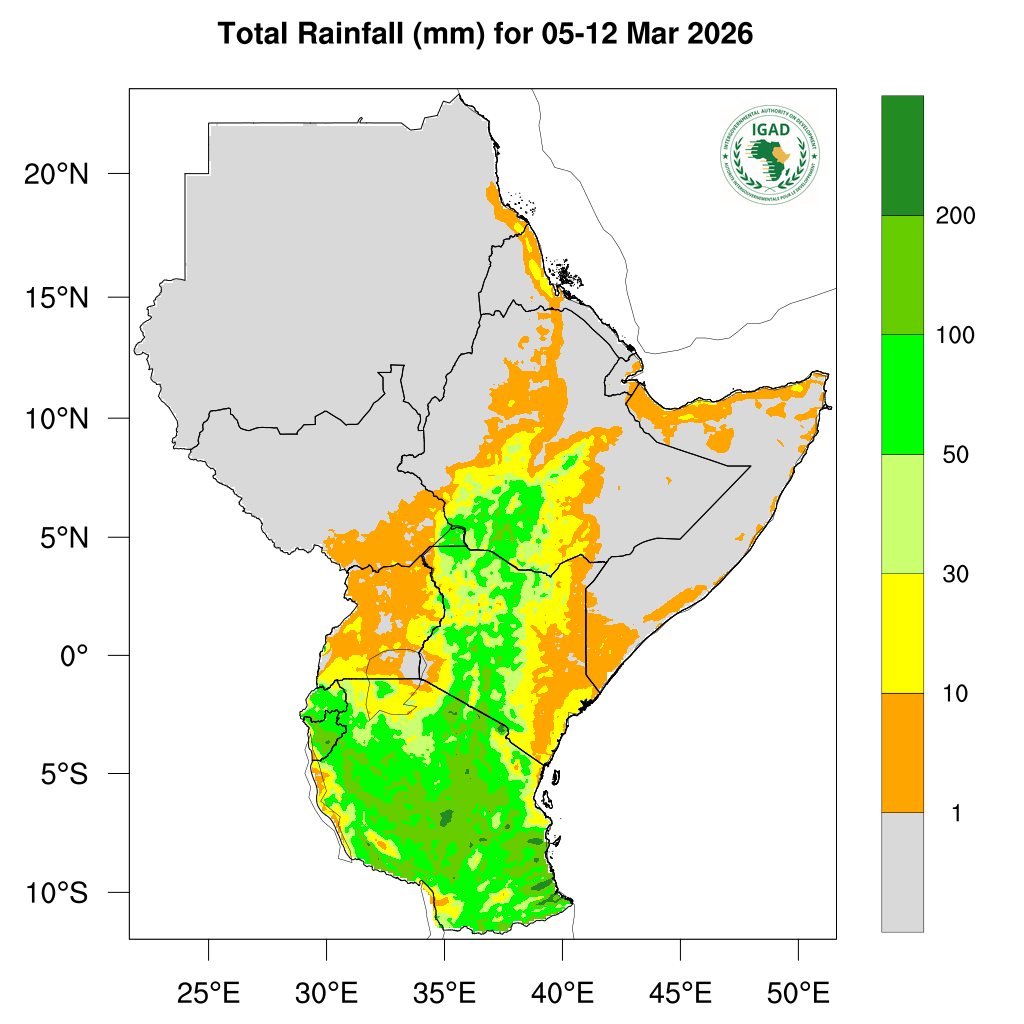

The long-awaited rainfall season is beginning to take shape across the Greater Horn of Africa, with several countries expected to experience enhanced precipitation between March 5 and March 12, 2026, raising concerns over possible flooding even as temperatures remain moderately high across the region.
According to the IGAD Climate Prediction and Applications Centre (ICPAC), the regional climate outlook indicates that central to northern Tanzania, large parts of Kenya, and southern Ethiopia are likely to receive the most significant rainfall during the forecast period.
ICPAC forecasts moderate rainfall ranging from 50 to 200 millimeters across most of Burundi, Rwanda, and Tanzania, as well as central to northern Kenya, and parts of southern Ethiopia.
Meanwhile, light rainfall below 50 millimeters is expected over most parts of Uganda, eastern Kenya, southern South Sudan, parts of southern Ethiopia, northern and southern Somalia, and coastal regions of Eritrea.
The rainfall pattern signals continued active seasonal weather across eastern Africa, with several regions likely to record wetter-than-usual conditions.
Meteorologists note that 1 millimeter of rainfall is equivalent to one litre of water per square meter, meaning the projected precipitation could deliver substantial water volumes across parts of the region.
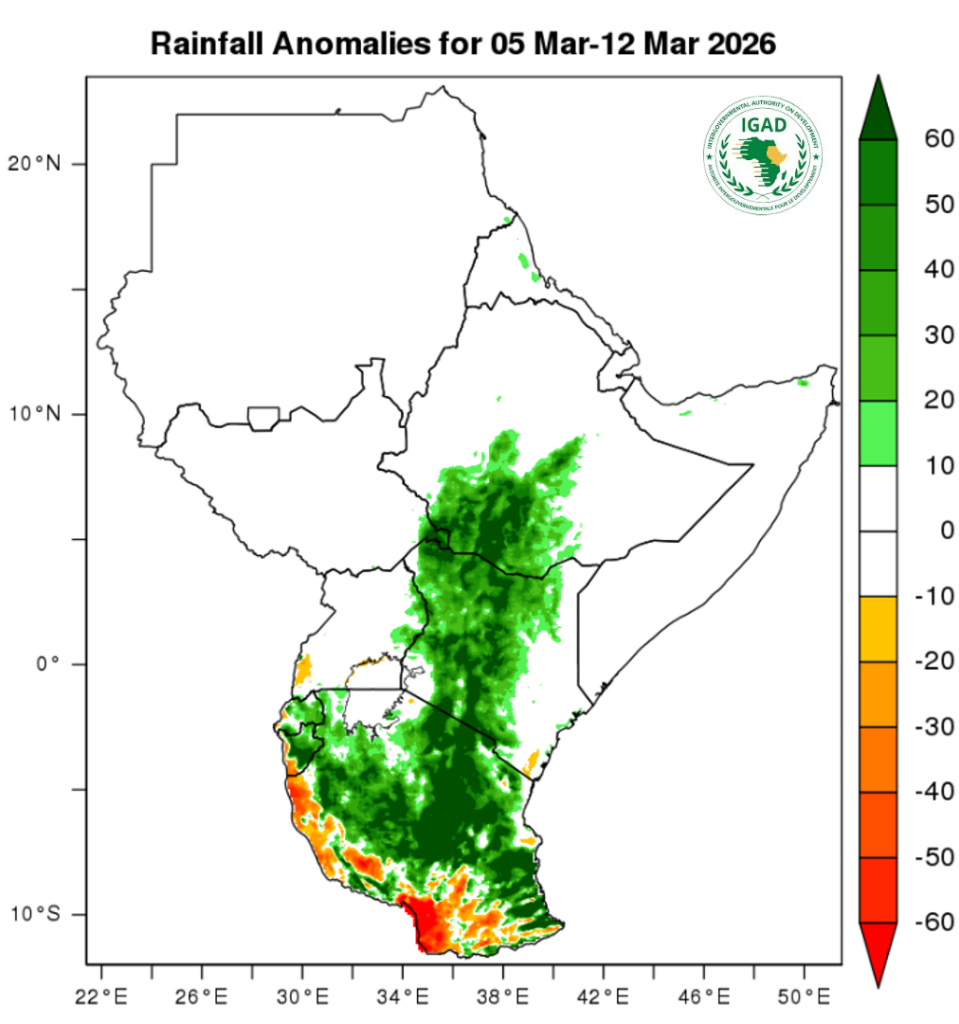
Above-Normal Rainfall in Several Areas
Forecast models further indicate above-average rainfall across central to northern Tanzania, as well as the central, western, northern, and southern parts of Kenya.
Similarly, southern Ethiopia and the central and eastern regions of Rwanda and Burundi are expected to experience rainfall totals exceeding what is typical for this time of year.
However, western and southern Tanzania may record less rainfall than usual, creating localized contrasts in weather patterns within the country.
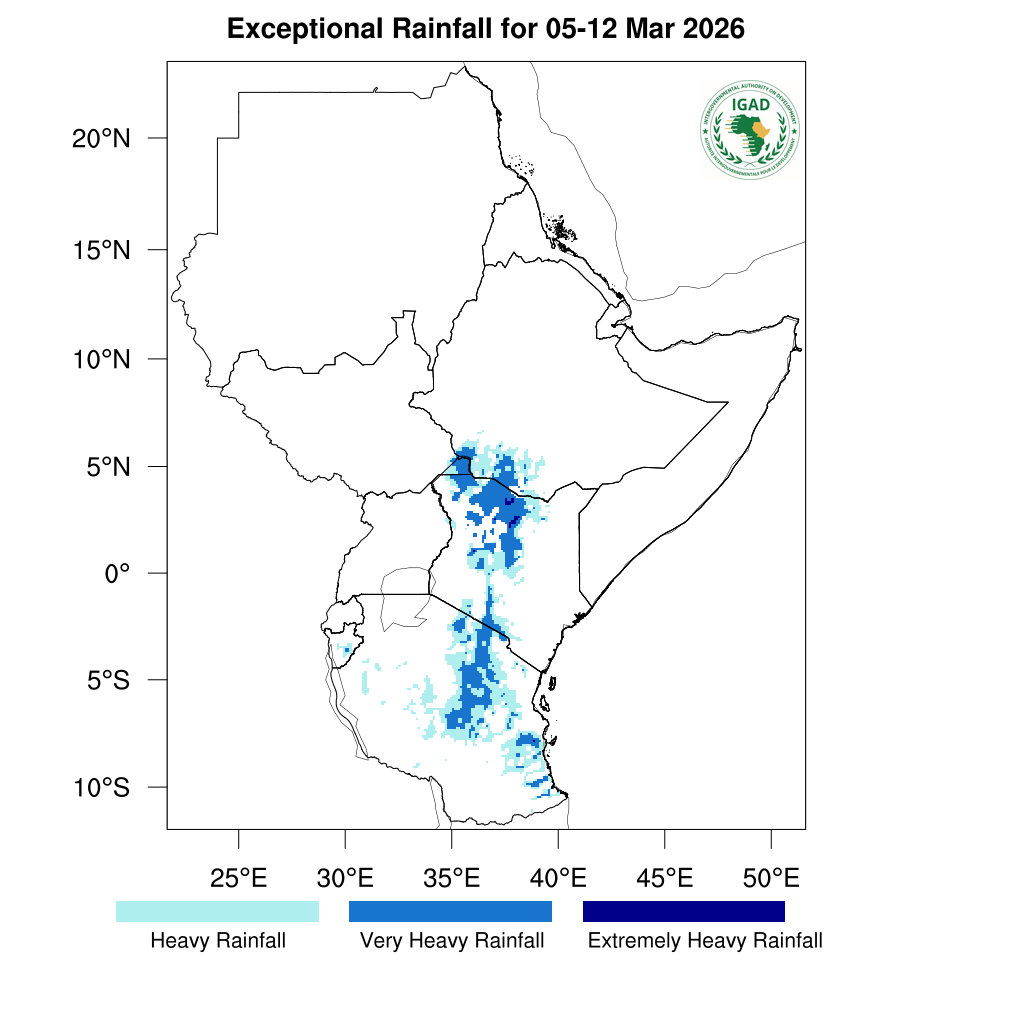
Exceptional Rainfall and Flood Risk
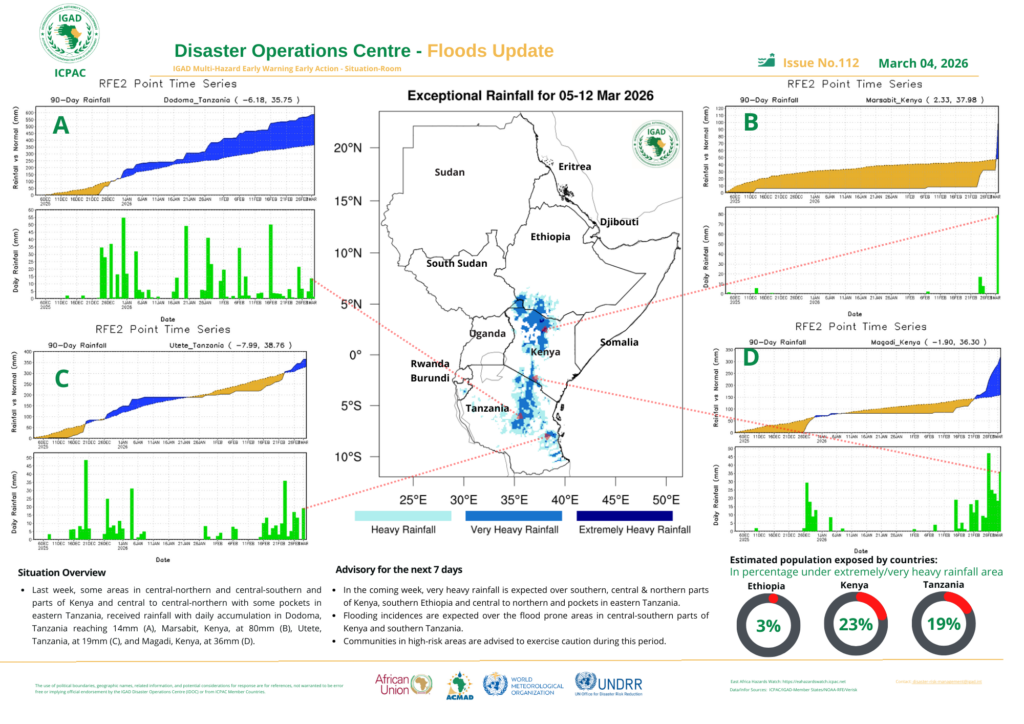
Forecasters are also warning of exceptionally heavy rainfall, with precipitation totals exceeding the 90th percentile expected across southern, central, and northern Kenya, southern Ethiopia, and central to northern Tanzania.
Such intense rainfall raises the likelihood of flooding in flood-prone areas, particularly across southern, central, and northern Kenya, as well as parts of southern Ethiopia and central to eastern Tanzania.
Communities living near rivers, low-lying settlements, and urban drainage systems are advised to remain alert to possible flash floods and waterlogging.
Flooding during this period could also disrupt transport infrastructure, agriculture, and settlements, especially in areas where soils are already saturated from earlier rains.
Warm Conditions Across the Region
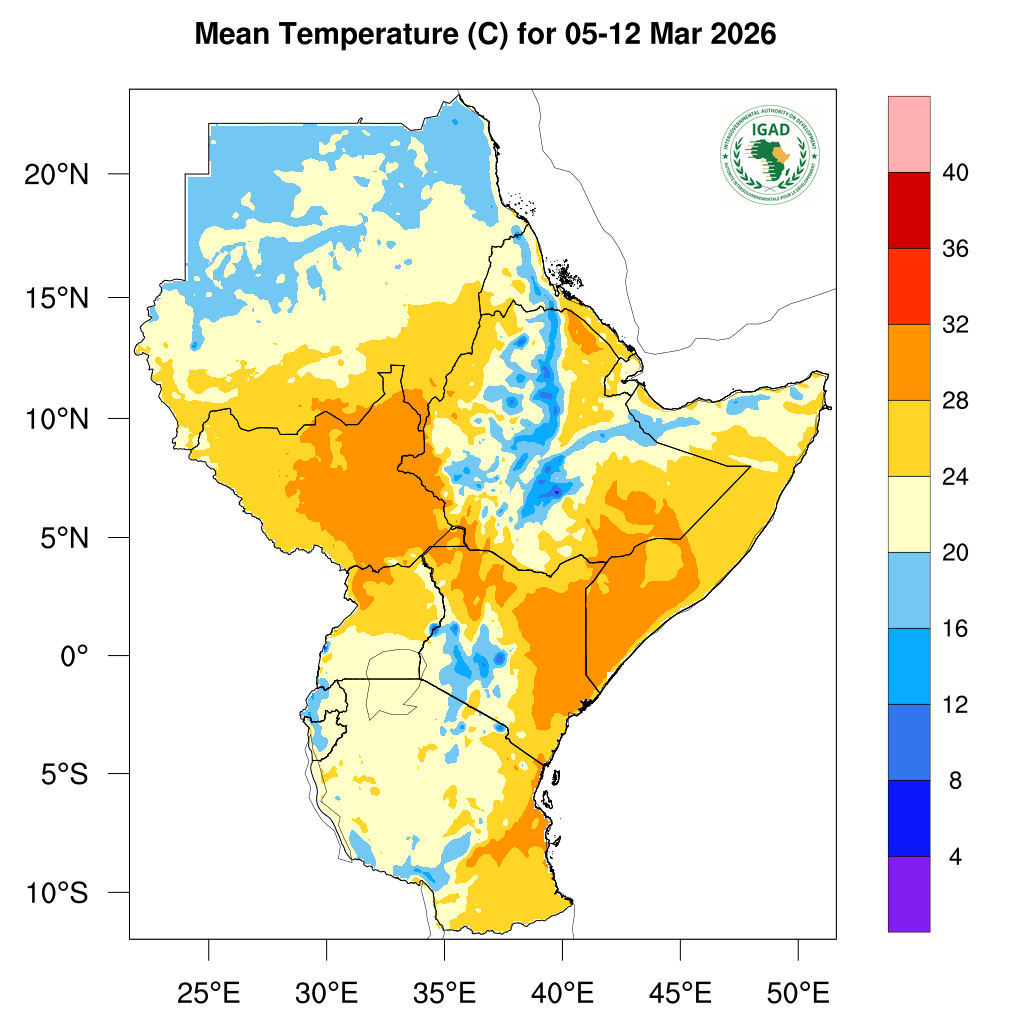
Alongside the rainfall, moderate to high temperatures ranging between 20°C and 32°C are expected across most parts of Tanzania, Kenya, Uganda, Somalia, South Sudan, Sudan, Djibouti, Eritrea, and parts of Ethiopia.
However, milder temperatures below 20°C are likely in several elevated or northern regions, including:
- The Ethiopian highlands
- Central to western Kenya
- Northern Sudan
- Northern Somalia
- Western regions of Rwanda and Burundi
These cooler pockets are largely associated with higher elevations and increased cloud cover linked to the rainy conditions.
Warmer-Than-Usual Temperatures Forecast
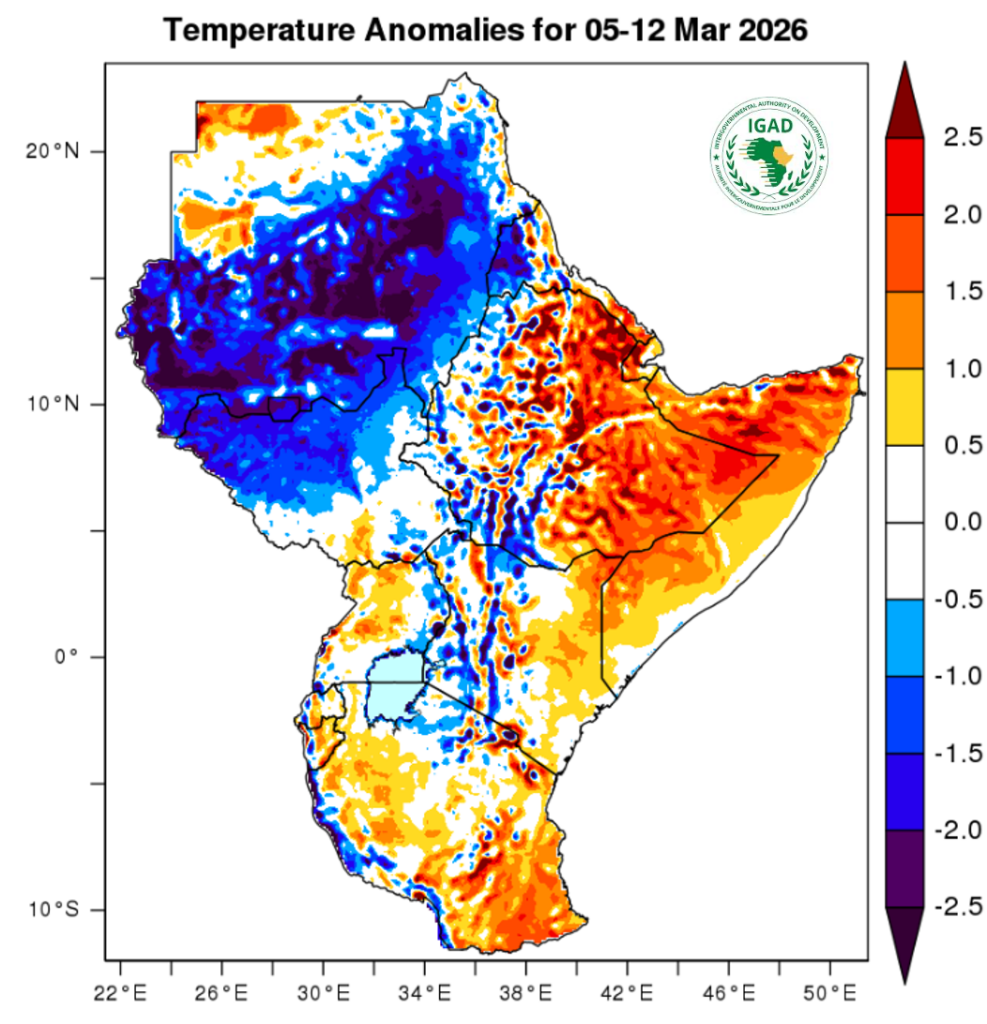
Despite localized cooling, most parts of the region are projected to experience warmer-than-average temperatures during the forecast period.
Countries expected to record these warmer conditions include Ethiopia, Somalia, Djibouti, Eritrea, Uganda, Rwanda, Burundi, and Tanzania.
In contrast, central to southern Sudan, northern South Sudan, parts of western Kenya, and southern Ethiopia may experience slightly cooler-than-normal temperatures, though these anomalies are expected to remain localized.
Heat Stress Risk in Eastern Areas
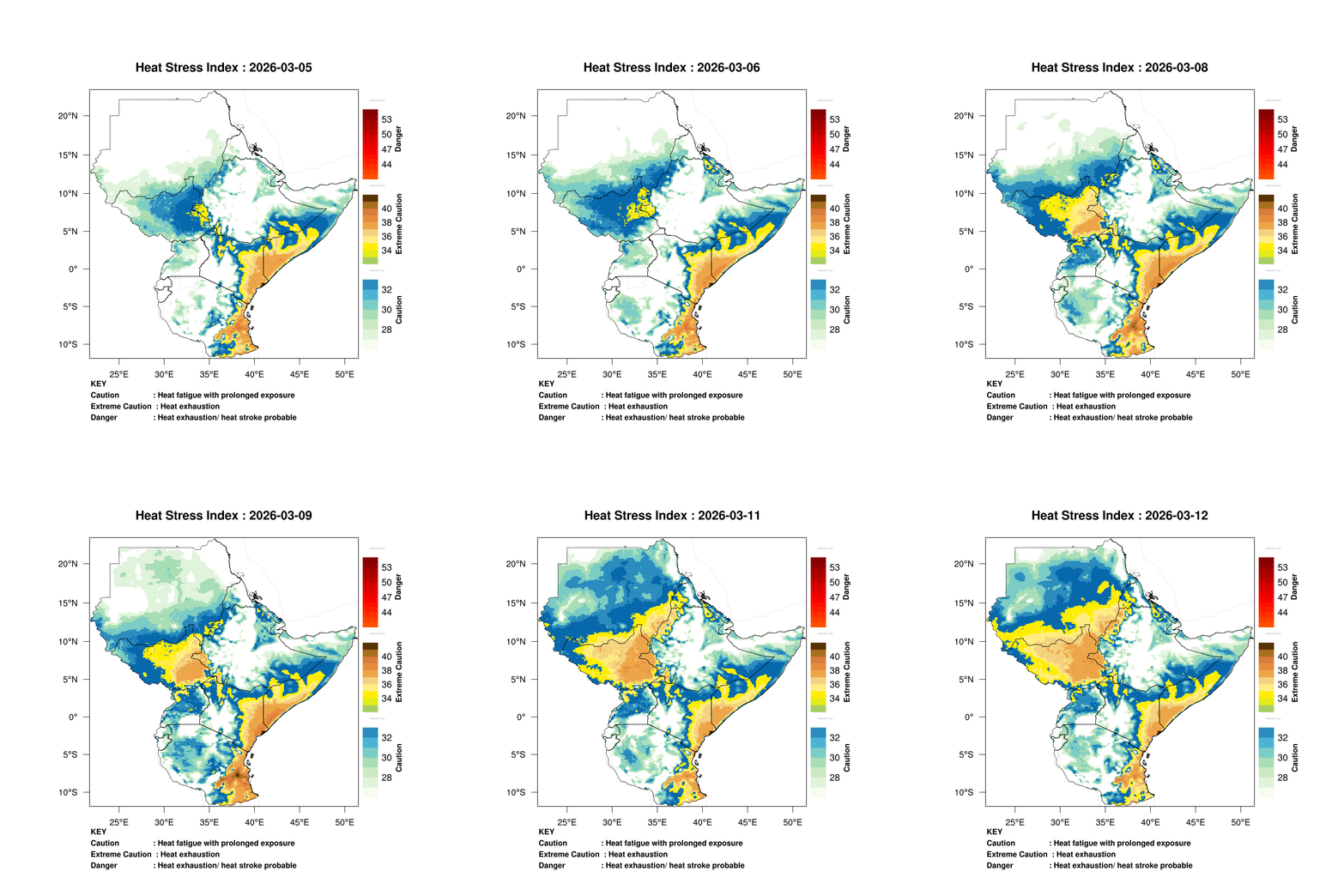
Even with rainfall forecast in several areas, elevated heat stress conditions are expected across parts of the region.
Areas likely to experience heightened heat stress include:
- South-eastern Tanzania
- Eastern Kenya
- Southern Somalia
- Eastern South Sudan
In these locations, heat stress levels may reach the “Extreme Caution” category, meaning prolonged exposure or strenuous outdoor activity could increase the risk of heat-related illnesses.
Health experts typically advise residents to stay hydrated, limit prolonged exposure to direct sunlight, and take breaks during strenuous outdoor activities.
Preparedness Remains Key
While the anticipated rainfall could benefit agriculture, water resources, and pasture regeneration, the possibility of extreme precipitation and flooding highlights the need for preparedness across vulnerable communities.
The authorities and residents in flood-prone areas are encouraged to closely monitor weather updates and take precautionary measures where necessary.
The evolving weather patterns come at a time when climate variability across the Greater Horn of Africa remains high, pointing to the importance of continuous monitoring to manage both water availability and weather-related risks.
Our Articles can be Read in any Language Click on your Right Handside….