
The Greater Horn of Africa is bracing for a drier-than-usual October to December season, raising fresh concerns for communities whose lives and livelihoods depend on rain-fed agriculture and pastoralism.
According to the latest forecast released during the 71st Greater Horn of Africa Climate Outlook Forum (GHACOF 71), large parts of the region may experience below-normal rainfall, a warning that could affect food security, water availability, and resilience planning.
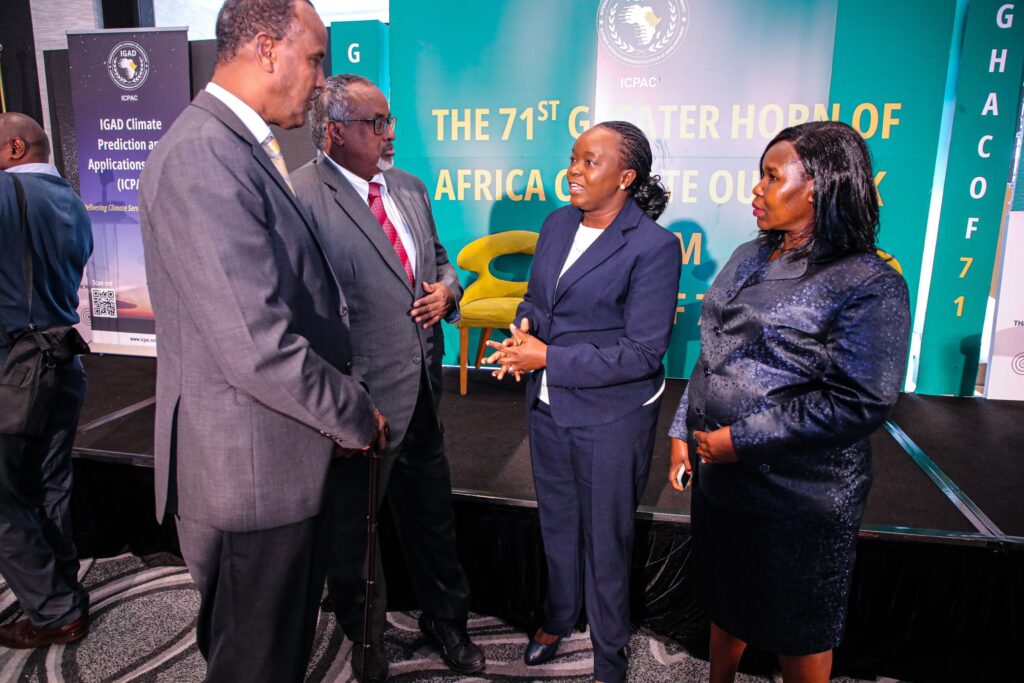
GHACOF 71, convened by IGAD’s Climate Prediction and Applications Centre (ICPAC) alongside national meteorological services, the WMO, and development partners, brought together climate scientists, policymakers, and sector stakeholders to track progress, assess challenges, and release the OND 2025 seasonal outlook.
“Now more than ever, it is apparent that collaboration among member states is urgent,” said H.E. Mohamed Ware, Deputy Executive Secretary of IGAD.
“The Greater Horn of Africa is at the frontline of the climate crisis. Climate information must reach the last mile, and only through collaboration and early action can we turn forecasts into meaningful messages that drive timely action,” said H.E. Ware.
For Kenya’s Environment Cabinet Secretary, Dr. Deborah Barasa, the message was equally clear: “Bridging the early warning gap requires shared knowledge, timely information, and a united regional approach. Kenya remains committed to frameworks that strengthen climate resilience across our communities.”
Why the OND Season Matters
The October to December rains contribute up to 70% of annual rainfall in parts of Kenya and Somalia, making the season critical for farmers and pastoralists.
A poor season often translates into reduced harvests, water shortages, livestock losses, and heightened humanitarian needs. Hence, with early warning systems that are timely, accurate, and reach the last mile, citizens can build resilience.
Edward Muriuki, Acting Director of the Kenya Meteorological Department, stressed that forecasts are only as useful as the action they inspire: “Early warning systems save lives only when they reach everyone, including the most vulnerable. At KMD, we remain committed to providing accurate and timely climate services that help communities plan, adapt, and build resilience.”
Key Highlights of the October to December 2025 Forecast
Rainfall Outlook
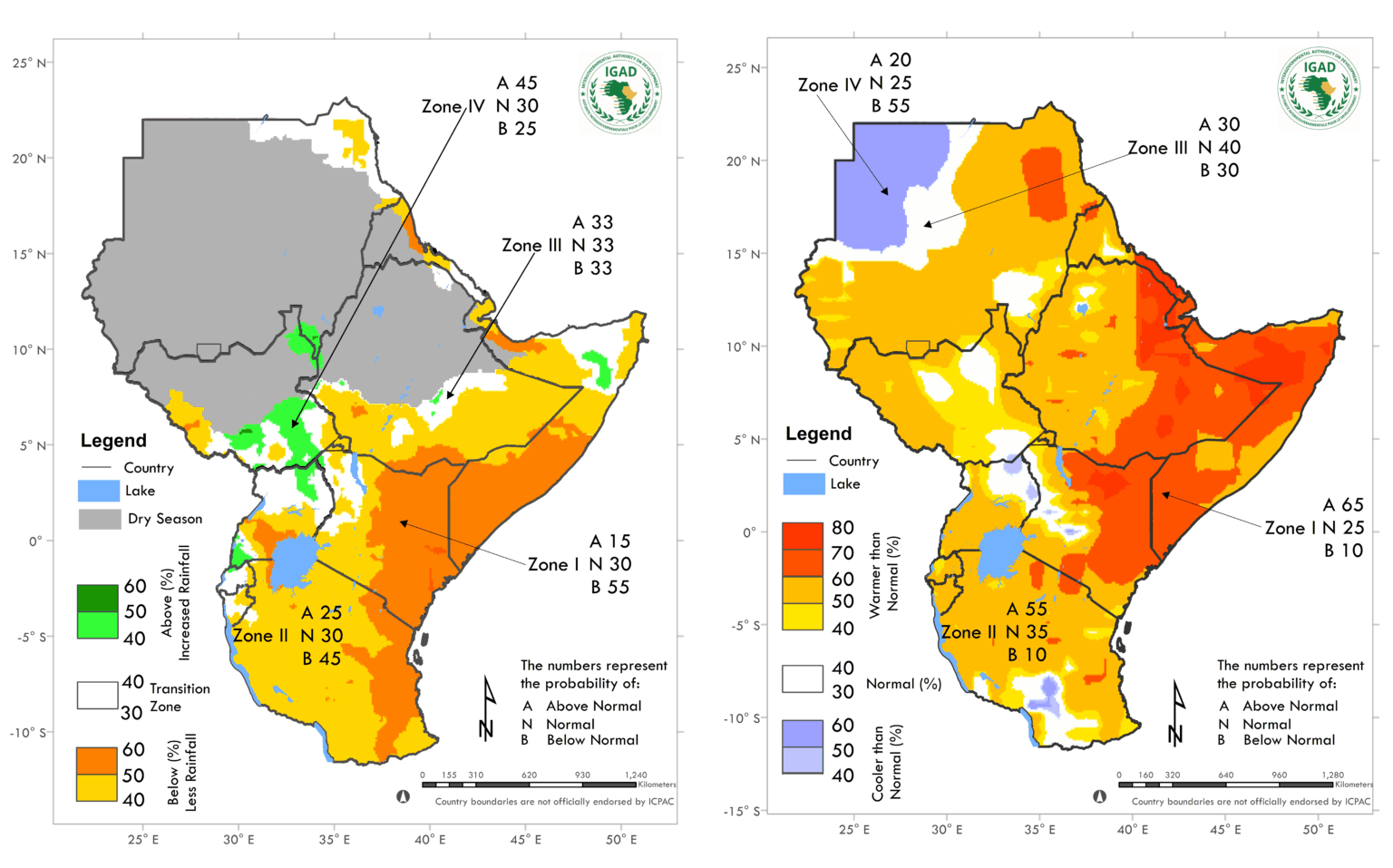
- Below-normal rainfall is likely over much of the region, especially in southern Ethiopia, most of Somalia, eastern Kenya, and parts of central and southern Tanzania.
- Wetter-than-usual conditions are forecast in south-eastern South Sudan, north-eastern and south-western Uganda, northern Somalia, and parts of northern Rwanda.
- Western Kenya, southern Uganda, Rwanda, Burundi, and north-western Tanzania could see over 300 mm of rainfall.
- Delayed rainfall onset is expected in eastern areas (southern Somalia, central/eastern Kenya, and southern/eastern Tanzania), while western areas may see early or normal onset.
Temperature Outlook
- Warmer-than-average surface temperatures are expected across most of the region, with the strongest likelihood in the east.
- Cooler-than-normal conditions may occur in cross-border areas of Uganda, South Sudan, and Kenya, as well as north-western Sudan.
What This Means for Communities
The forecast signals mixed fortunes, thus an emphasis on the importance of preparedness for the citizens in diverse regions.
While some regions may benefit from above-normal rains, the widespread drier-than-average conditions could intensify existing vulnerabilities, especially in drought-prone areas of Somalia, Kenya, and Ethiopia.
Farmers may need to adjust planting calendars, pastoralists might face shrinking pastures, and governments will likely have to scale up preparedness measures to safeguard food security.
The GHACOF 71 forum underscored one clear message: timely information, shared regionally and acted upon locally, will be the difference between resilience and crisis.