For so long, indigenous knowledge has been downplayed, cited by the over-reliance on scientific knowledge in explaining the unprecedented eventualities of climate change. This has left a significant gap among local communities, Indigenous peoples, and more informed, tech-savvy individuals.
The role of indigenous knowledge, despite being debatable over the years, has now reached a point where it can’t be sidelined anymore.
The integration of science with indigenous knowledge to create solutions has become essential in charting a collective path forward. These knowledge systems and their integration are crucial not only for Kenya’s goals of developing sustainably and leaving no one behind but for the whole globe. Holders of indigenous and local knowledge face major uncertainties when it comes to climate change, yet their ability to detail ways of response and survival is instrumental.
Indicators such as flowering times, rainfall patterns, and dry months are being affected by climate change, confounding traditional forecasters. The need to mobilize and enhance local and traditional knowledge systems is heightened in efforts to enable populations and institutions to constantly adjust to unprecedented variability, extreme weather events, and slow-onset events such as sea-level rise.
Based on the “Climate Change Impacts on Kenya” report, research shows that indigenous groups are key to the protection and conservation of the ecosystems in which they live. This is particularly true for the stewardship of natural resources and territories held by indigenous communities. For example, the Mijikenda are credited with protecting part of the remaining coastal tropical rainforests in Kenya, which form the Sacred Mijikenda Kaya Forest ecosystem.
This reveals an intricate relationship between indigenous peoples and their environment—a biodiversity upon which they rely heavily for sustenance, yet can restore and conserve effectively. This balance of sustainable utilization and restoration is a crucial aspect that Indigenous knowledge has maintained for centuries, hence the need to rely on some of these practices to tackle the conservation challenges faced today.
According to research published by Oakland Institute researchers Frédéric Mousseau and intern scholars Mirabai Venkatesh and Eric Heilmann in their report titled “From Abuse to Power: Ending Fortress Conservation in the Democratic Republic of Congo,” indigenous communities are in extreme danger of extinction.
The research reveals that indigenous peoples face numerous challenges, including eviction from their lands in cases where protective areas are being allocated on these parcels of land. The report highlights that in 2019, the world of international conservation was rocked by reports of egregious human rights abuses committed against local communities by security forces in Protected Areas (PAs) managed by the World Wildlife Fund (WWF) in Asia and Africa.
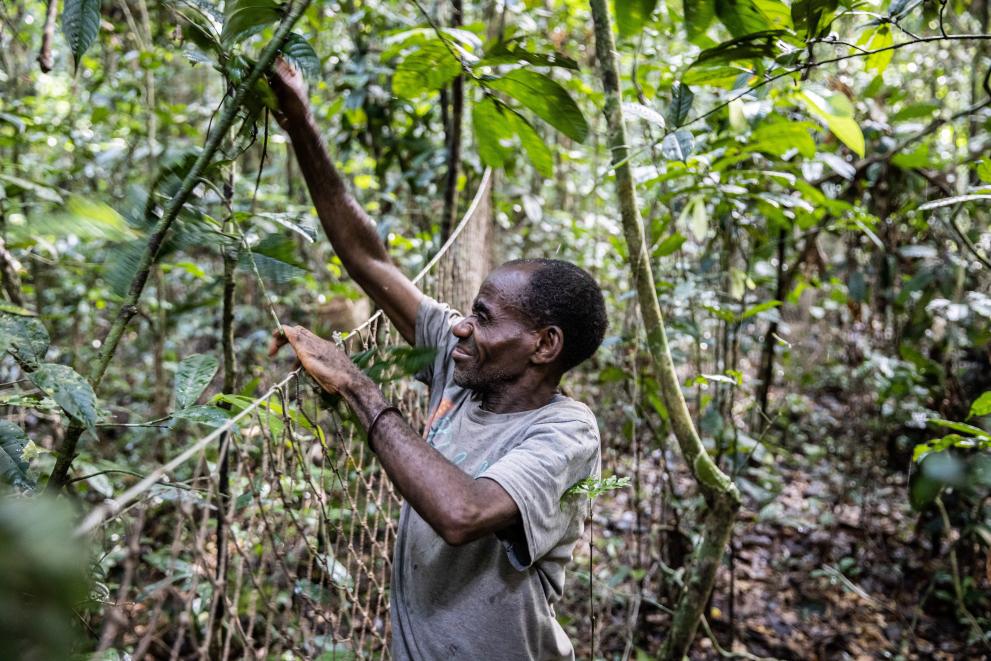
In response to these revelations, the conservation industry—including international conservation organizations, donor agencies, and national conservation authorities—reacted in various ways. The Oakland Institute publication emphasizes the importance of recognizing that these indigenous communities have coexisted with these ecosystems for centuries. This long-standing relationship has enabled them to better understand how to navigate the issues that arise within their environment, ensuring a maintained balance.
Archaeological evidence documents ongoing human settlement in present-day DRC for at least 46,000 years. Throughout this extensive period, the land was managed collectively through local customary systems. Although these practices have undoubtedly evolved, ethnographic evidence from across the DRC indicates some basic commonalities in the systems that were in place when Europeans arrived in the late 19th century:
- The land was divided into local customary territories, each belonging to a particular settlement or group of settlements that oversaw its management.
- The customary territory was conceived as being bequeathed to the living by the communities’ ancestors and was to be protected for future generations.
- The pool of users of the territory was limited to members of the local community, along with their relatives and visitors permitted by them.
- Natural resource exploitation was restricted to low-impact subsistence activities undertaken over a large area.
- Certain spaces within the territory were visited only seasonally, allowing populations of large game to thrive.
- Various conservation practices were employed in daily life, such as making the mesh on fishing nets large enough for small fish to pass through and taking every fourth day off from subsistence activities to let the forest rest.
Each territory was protected from outside exploitation by its customary managers and functioned as an Indigenous Protected Area.
Early European explorers encountered a landscape filled with abundant flora and fauna, as the entire ecosystem was effectively protected. Customary systems have exhibited remarkable resilience as the de facto system of land management in the DRC until the present, despite various colonial and post-colonial laws proclaiming the rights of the state over the national territory.
It is only when the relationship between people and land is disrupted—by commercial exploitation, Protected Areas, or war—that local knowledge and customary management systems are threatened.