Across the Western Indian Ocean coastline, a quiet but determined transformation is taking shape as women step forward to undertake fragile marine conservation of ecosystems through science, community action, and innovation.
From cleaning beaches and restoring mangroves to mapping endangered sea turtles, women conservationists across Kenya and Tanzania are translating global marine protection goals into tangible action on the ground.
Tracy Kadessa, a maritime law advocate, would opine that women are on the frontline of not only the impacts, but also of crafting solutions. Their work comes at a critical time when ocean ecosystems face mounting pressures from climate change, plastic pollution, and overfishing.

According to the United Nations Environment Programme, between 8 and 11 million tonnes of plastic waste enter the ocean every year, while more than a third of global fish stocks are overexploited.
For many conservation practitioners, reversing these trends requires more than policy commitments. It demands grassroots leadership geared at real transformation and meaningful community engagement.
Community Action Anchoring Marine Conservation
Along Tanzania’s coastline, Gloria Loishiye, founder of SafeeshaPro Tanzania, is leading community-based efforts that combine waste management, ecosystem restoration, and women’s empowerment.
Her organisation operates on what she describes as a triple-bottom-line model focusing on people, planet, and profit. “Policy creates protection,” Loishiye says; however, she emphasizes that “People create preservation.”
Her work centres on tackling coastal pollution while strengthening natural ecosystems that support fisheries and protect shorelines. This is entailed in actions like clean-ups, replanting of mangroves, and community exchanges.
Mangrove forests, she explains, are among the most powerful natural climate solutions. Scientists estimate that mangroves can store up to four times more carbon per hectare than tropical forests, while also providing nurseries for fish and shielding coastal communities from storm surges.

Yet across East Africa, these ecosystems remain under threat from coastal development, unsustainable harvesting, and pollution. For Loishiye, conservation work often happens away from the public spotlight.
“Conservation is what you do when nobody is watching,” she says. “When there are no cameras. No banners. Just you and the beach.”
Community clean-up campaigns, waste sorting initiatives, and mangrove restoration programmes may appear small in scale, but they contribute to improving ecological conditions across entire coastal ecosystems.
She believes marine conservation and protection efforts cannot succeed if the broader ocean environment remains polluted.
“If women are excluded,” she says, “conservation loses its social foundation.”
Science Beneath the Surface
Further north along Kenya’s coast, marine biologist Leah Mainye is using technology and scientific monitoring to better understand and protect sea turtle populations.
Working with the Olive Ridley Project in Kwale County, Mainye leads underwater monitoring programmes focused on endangered turtle species. Her journey into marine science began with a fascination for wildlife documentaries, despite having few visible role models in the field.
“When I joined marine conservation, I didn’t have anyone to look up to,” she recalls. Through training as a diver, she became the first Black Kenyan woman to join her organisation’s underwater turtle monitoring team.
Since 2018, the project has documented more than 1,000 individual green turtles and 94 critically endangered hawksbill turtles along Kenya’s coastline.
Researchers identify individual turtles using photographic identification software that recognises the unique scale patterns on each turtle’s face. This allows scientists to track individuals over time without invasive tagging.
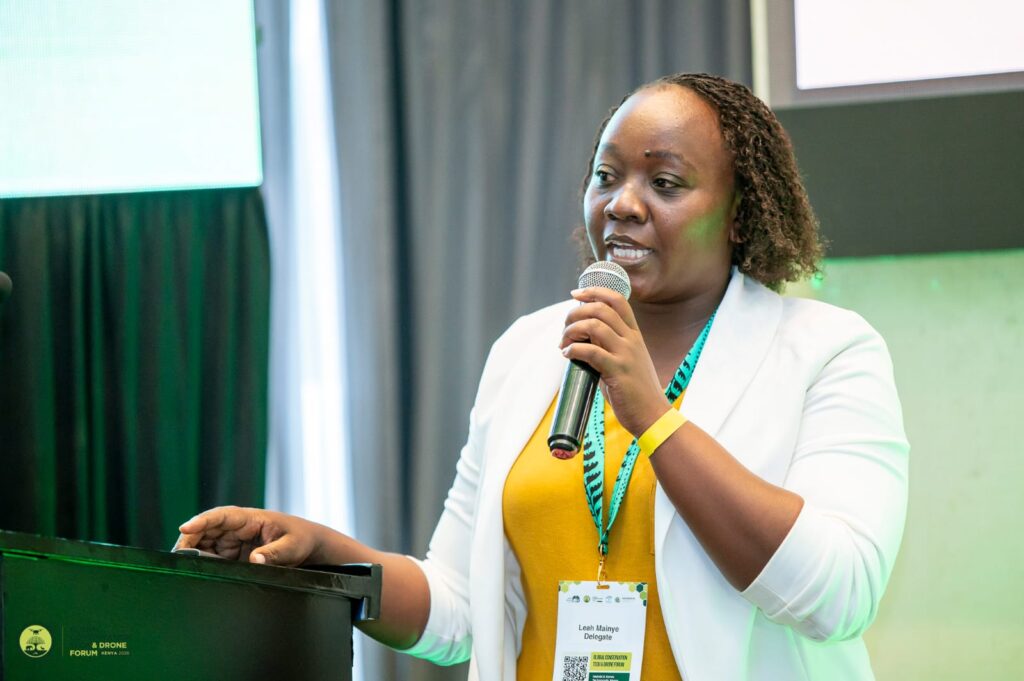
Notably, technology is indeed expanding research capacity with efficiency, accuracy, and timeliness. Using drone mapping in Diani’s lagoon systems, Mainye and her team say they can track turtle movements during high tide, revealing feeding routes and habitat use that had previously been difficult to study.
“During one pilot monitoring season, researchers documented over 100 turtles entering lagoon habitats that had previously been understudied. The aerial mapping complements underwater surveys, helping scientists understand how turtles navigate coral reef systems and how environmental stressors may be affecting them,” adds Mainye.
Adding that some turtles observed during surveys have shown signs of fibropapillomatosis, a disease associated with environmental degradation. “Without data,” Mainye says, “you cannot advocate for protection.”
Building Ocean Stewardship
Dr. Christine Nyangweso, a biodiversity conservationist at KWS, urged that marine conservation ultimately begins upstream.
She emphasized, pointing out that there is a need to address the fear people have of oceans. “Our rivers reach the ocean. Our waste reaches the ocean,” she explains. “We are connected whether we see it or not.”
Community engagement remains a key pillar of conservation efforts since the community is embedded in indigenous knowledge, which has always supported these ecosystems and mutually benefits from them.

Giving us a sneak peek at how, through Sea Turtle Ambassador programmes run in collaboration with the Kenya Wildlife Service, residents are trained to monitor nesting sites, report turtle strandings, and raise awareness about ocean health.
Across East Africa’s coast, these grassroots initiatives are gradually building a culture of stewardship around marine ecosystems.
While global conferences and policy frameworks shape international commitments, it is often local communities that translate those commitments into lasting impact, and it is notable how, increasingly, women are at the centre of that transformation.