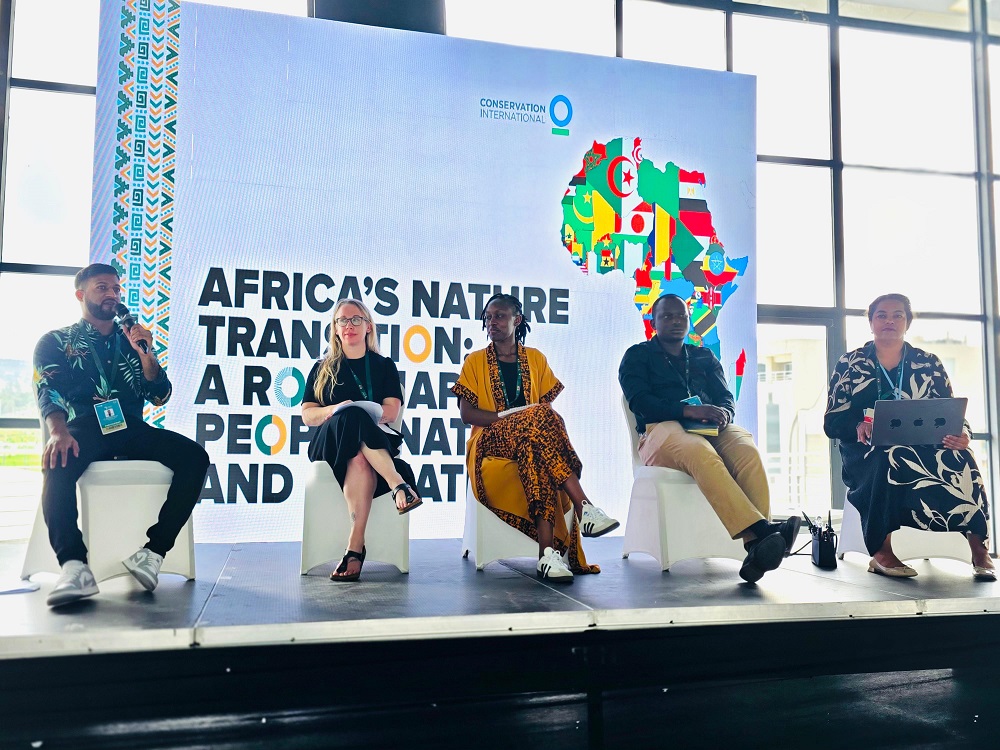

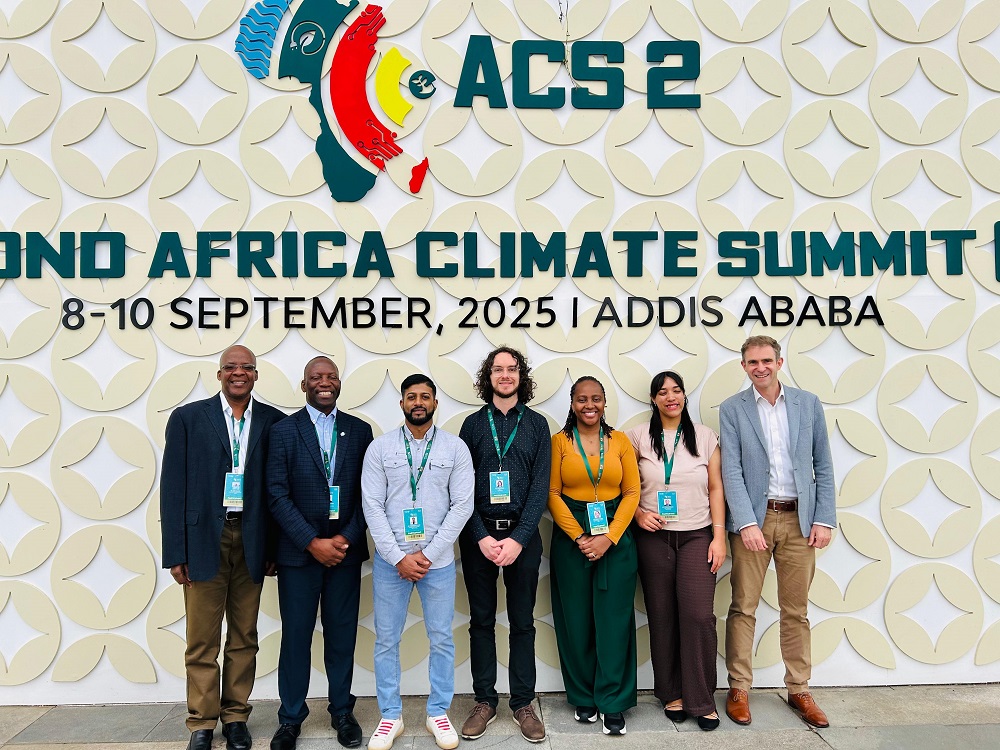
At the second Africa Climate Summit in Addis Ababa, one phrase echoed through panel halls and side events: nature-based solutions (NbS).
From rangelands to blue carbon ecosystems, African leaders, Global climate leaders, global and regional financiers, private sectors, and climate experts, scientists, and activists emphasized that the continent’s greatest assets, its vast landscapes and vibrant communities, hold the key to sustainable development.
Even though for NbS to move beyond being just a global buzzword, Africa requires actionable pathways rooted in its own priorities.
In a conversation with Dr. Rajah Perushan, Technical Director of the Nature-Based Solutions Roadmap in Africa at Conservation International (CI), following his contribution to a side event on “Africa’s Nature Transition: A Roadmap for People, Nature & Climate,” the complex interdependence between communities and nature came into sharper focus.
For Dr. Rajah, this moment is significant and pivotal. He sees a continent seizing its future by cementing its foundation in local solutions, partaking in by communities who, in most instances, are on the frontlines of climate shocks.
“We must view nature as a critical resource for improving livelihoods, protecting biodiversity, sustaining freshwater ecosystems, and completing not only the picture of a prosperous Africa but also a lived reality,” says Dr. Rajah.
A Childhood Fascination, A Global Mission
A tee-to-tee with Dr. Rajah reveals a journey into environmental work that began in his early childhood. He recalls a time spent deeply connected to nature, as an experience that sparked a lifelong fascination with the human–nature relationship and inspired him to pursue a degree in Environmental Science.
Driven by a desire to create real-world impact, he sought out organizations committed to meaningful change, a pursuit that led him to Conservation International (CI) when it was still a modest player in Africa’s conservation landscape.
The decision, he says, remains one of his proudest, as it allowed him to grow in the field, collaborate with diverse stakeholders, and gain insights critical to advancing environmental solutions.
Seven years on, Dr. Rajah is now a central figure within CI’s global technical team, guiding the Africa Field Management Unit. He reveals that what keeps him rooted in this role is not only the institution’s expansion but also the visible, envisioned transformation in African communities where their projects are implemented.
“Upon seeing the boots on the ground impact, how projects touch daily lives, that’s when one realizes how much this work matters,” he calmly opines.
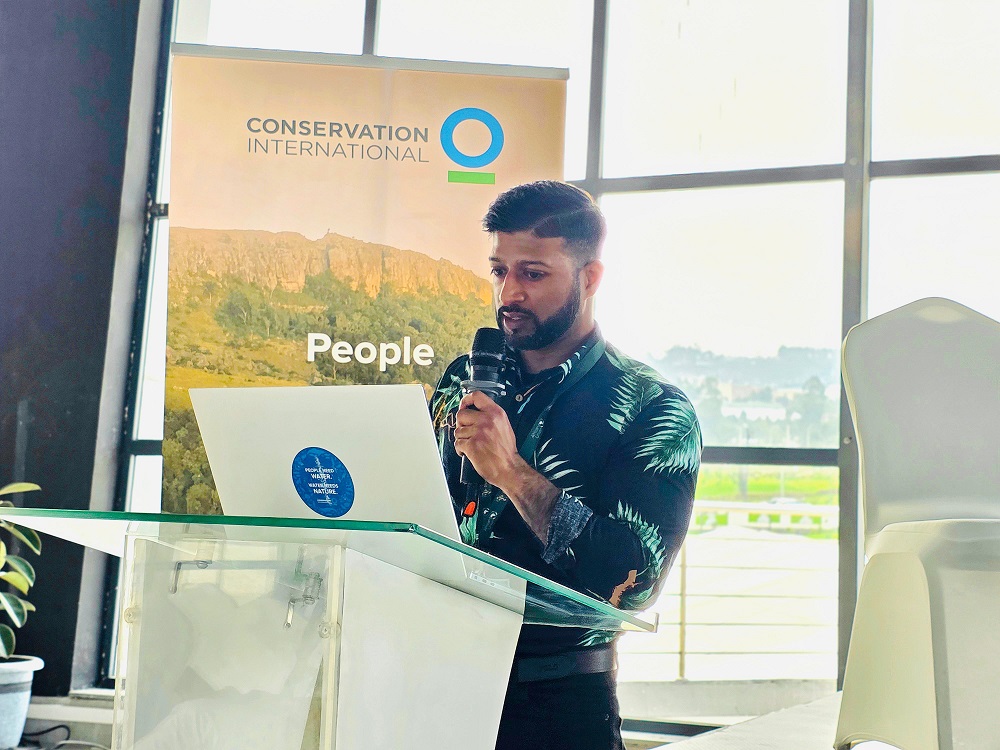
From Local Pilots to Continental Impact
One of CI’s most significant recent achievements is the Herding for Health program. Rajah reveals that the initiative started small but has now expanded to over 7 countries across the continent.
Conservation International has showcased gains with improved management of 1 million hectares for H4H, motivating the envisioned target of 10 million hectares in the coming years.
Rajah points to this as proof of how NBS can scale effectively, particularly when local communities are placed at the forefront and their indigenous knowledge is embraced to ensure a deeper comprehension of local challenges.
He stresses that for communities to be properly involved, they must see the tangible advantages of restoration. Building trust with locals, he says, is essential for them to embrace and take ownership of the projects.
“Five years ago, Herding for Health didn’t exist beyond a concept. Today, it’s a continental force, helping pastoralist communities manage land sustainably, secure livelihoods, and build resilience,” he adds.
The Heartbeat of Africa: Rangelands
For Conservation International, Africa’s rangelands, bushlands, shrublands, to savannas and grasslands are central to climate resilience, embodying the lived realities of the communities on the front lines.
This fact highlights a sector often overlooked in global debates, yet these ecosystems are lifelines for pastoralist communities who depend on livestock for currency, food security, and cultural dignity.
According to Dr. Raja, nature-based solutions embedded in building community resilience begin not with scientific plans, but with earning trust. “We can only move at the speed of trust,” he explains.
Before restoring a single hectare, CI spends years building relationships, listening to communities, and co-designing solutions. In places like Mozambique and Liberia, this process took nearly a decade, but once trust was earned, the impact proved collective and transformative.
At ACS2, Conservation International introduced the Africa Nature-Based Solutions Roadmap, a framework tailored to the continent’s realities rather than imported from global templates. The roadmap identifies eight “action tracks,” from climate-smart agriculture to blue carbon initiatives.
The goal is twofold: to guide policymakers in aligning NBS with Africa’s Agenda 2063 goals, and to convince often-hesitant global financiers that durable, science-backed pathways exist.
“It’s not enough to design beautiful solutions,” Dr. Rajah says. “We need to provide clarity and evidence so decision-makers feel confident to invest.”
Diversifying Africa’s Green Finance
While the global carbon credit market dominates headlines and faces contention from some African experts who view it as a false solution, Dr. Rajah believes Africa must widen its lens to accommodate more locally grounded solutions that are enabling the most vulnerable to be resilient.
He advocates for deeper exploration of alternatives, from biodiversity to ocean credits. “We are only responsible for 3–4% of global emissions. Why should sequestration be our primary burden?” he asks.
Instead, he champions innovative finance mechanisms such as biodiversity credits, freshwater credits, and community-driven credits that better reflect Africa’s multifaceted needs.
“Our solutions must deliver more than carbon; they must provide biodiversity protection, secure livelihoods, sustain freshwater, and create green jobs.”
With shifting geopolitics and an uncertain donor landscape, Dr. Rajah sees a historic opening for Africa to take charge, curating solutions from localized actions in a way that enhances what works best at the community level.
“Now is the prime chance for Africa to step up and take ownership of its natural resources,” he says. “If we seize this moment, the next decade could usher in a just and prosperous nature-based transition.”