By using this site, you agree to the Privacy Policy and Terms of Use.
Accept
Green Print ReportGreen Print ReportGreen Print Report
Font ResizerAa
  • Home
  • News
  • Climate
  • Renewable Energy
  • Biodiversity
  • Contact US
Reading: Can Tanzania’s Master Plan Cut Farming Costs by Half?
Font ResizerAa
Green Print ReportGreen Print Report
  • Home
  • News
  • Climate
  • Renewable Energy
  • Biodiversity
  • Contact US
Search
  • Home
  • News
  • Climate
  • Renewable Energy
  • Biodiversity
  • Contact US
Have an existing account? Sign In
  • Home
  • News
  • Climate
  • Renewable Energy
  • Biodiversity
  • Contact US
© The Greenprint Report. All Rights Reserved.
Agriculture

Can Tanzania’s Master Plan Cut Farming Costs by Half?

Sammy Mwangi
Last updated: 2026/03/19 at 1:09 PM
By Sammy Mwangi 4 Min Read
Share
4 Min Read
SHARE

In mid-February 2026, Tanzania took significant steps towards implementing its ambitious 2050 Master Plan for the transformation of agriculture, livestock, and fisheries.

Held on February 12 in Singida Region, the key consultative meeting highlighted the government’s commitment to slashing production costs, enhancing crop value, and lifting farmer incomes amid climate challenges.

The Master Plan forms a cornerstone of Tanzania’s Vision 2050, launched by President Samia Suluhu Hassan in July 2025, targeting upper-middle-income status by mid-century.

The Master Plan forms a cornerstone of Tanzania’s Vision 2050, launched by President Samia Suluhu Hassan in July 2025

Moreover, the plan prioritizes reducing transportation and production costs while boosting earnings for farmers, herders, and fisherfolk through private-sector involvement.

Key goals include linking high-output zones via agricultural corridors; networks integrating roads, rails, ports, markets, and processing hubs.

Speaking during the launch, Dodoma Regional Commissioner Hon. Rosemary Senyamule said, “These corridors as vital for streamlining supply chains and attracting”.

The plan builds on broader Vision 2050 frameworks, with supporting documents like the 25-Year Perspective Plan (2026/27–2050/51) and Fourth Five-Year Plan nearing parliamentary approval in early February 2026.

Mid-February Momentum

The February 12 meeting in Singida gathered regional and council experts to foster consensus on core concepts. Senyamule emphasized President Hassan’s Sixth Phase Government’s focus on sector reforms to spur economic growth, jobs, and livelihoods.

Agricultural Transformation Office (ATO) Director Ms. Elizabeth Missokia emphasized that corridors unify production, processing, transport, and marketing for faster sector-wide change.

“This aligns with the plan’s climate-resilient approach, addressing vulnerabilities in rain-fed farming prevalent across Tanzania,” she said.

Such engagements signal accelerated rollout, following Vision 2050’s official launch preparations finalized by the National Planning Commission (NPC).

NPC Executive Secretary Dr. Fred Msemwa noted on February 1 that implementation starts July 1, 2026, backed by tools like the National Project Management Information System.

Economic and Sectoral Impacts

Agriculture employs over 65% of Tanzanians and drives 25-30% of GDP, yet smallholders face high input costs and market barriers. The Master Plan counters this by promoting value addition, e.g., agro-processing to cut post-harvest losses estimated at 20-40% for perishables.
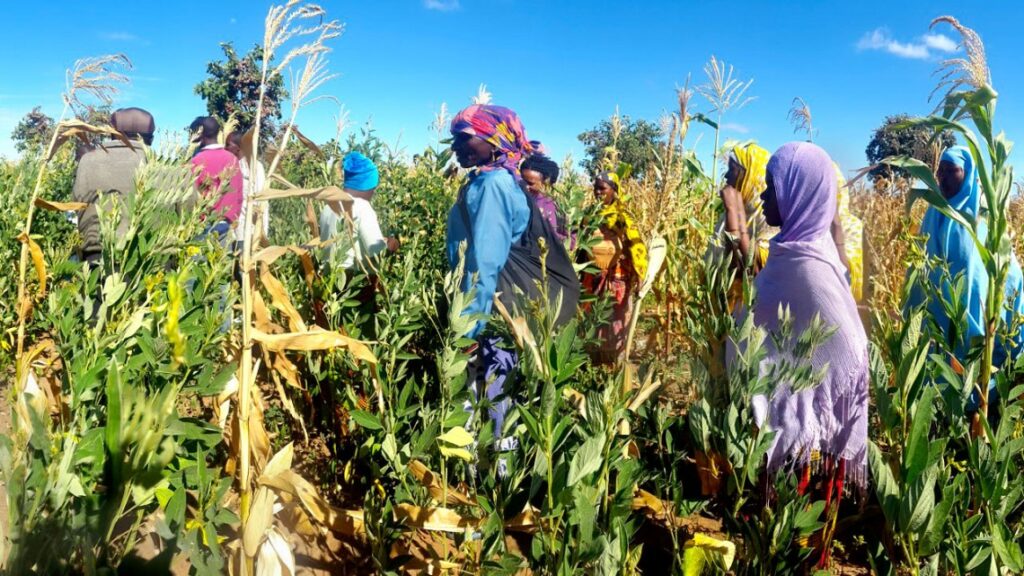
Agriculture employs over 65% of Tanzanians and drives 25-30% of GDP, yet smallholders face high input costs and market barriers.

Projections tie into Ministry of Agriculture targets: 10% sector growth by 2030, exports rising from $1.2 billion to $5 billion, and 3 million youth/women jobs. The 2025/26 budget emphasizes crop yields, like 2.275 million tons of strategic crops.

For farmers, lower logistics costs via corridors could halve transport expenses, currently 30-50% of produce value in remote areas. Enhanced incomes support poverty halving by 2030, per ministerial plans.

Priority AreaKey Targets by 2030Strategies
Crop Sector5% annual growth; 100% industry raw materialsCorridors, processing hubs 
Exports$5B from $1.2BValue addition, market links 
Jobs3M for youth/womenPrivate investment, training 
PovertyHalve national rateIncome boosts, climate adaptation  ​

Read Also: Enhancing Water Efficiency and Agriculture in Morocco

You Might Also Like

Siaya County Strengthens Agricultural Value Chains Through NAVCDP Interventions

Bridging Science and Soil: A Look at Seed Innovation in Kenya

Africa’s Agricultural Future Will Rise or Fall on Its Extension Workforce

Elevating Smallholder Voices in East Africa’s Agricultural Adaptation Discourse

AFSA Calls for a Path to COP30 Embedded in Agroecology

TAGGED: Agriculture, Sustainable Farming
Sammy Mwangi March 19, 2026 March 19, 2026
Share This Article
Facebook Twitter Email Copy Link Print
Leave a comment

Leave a Reply Cancel reply

Your email address will not be published. Required fields are marked *

Weekly Newsletter

Subscribe to our newsletter to get our newest articles instantly!


Also Read

Sports

SportPesa League to crown season’s best at inaugural Gala Awards

The 2025/26 SportPesa League season reaches its climax this Thursday with the…

By Editorial Desk 5 Min Read
CorporateNews

fly748.com Eyes Cooperative Sector Partnerships to Expand Domestic Travel Market

fly748.com is pursuing strategic partnerships with Kenya’s cooperative societies as it seeks…

By Editorial Desk 4 Min Read
News

Bomet Teacher Bags Kshs 18.6 Million as SportPesa Rewards Jackpot Winners

SportPesa has celebrated three jackpot winners during an unveiling event held in…

By Editorial Desk 3 Min Read

More Popular from GreenPrint Report

UNEA-6
ClimateSustainability

UNEA-6 Sparks Global Collaboration for a Sustainable Future

By Editorial Desk 4 Min Read
UNEA-6

UNEA-6 Sparks Global Collaboration for a Sustainable Future

By Editorial Desk
new collectoive quantified goal
ClimateSustainability

New Collective Quantified Goal as a Future Financing Solution

By Editorial Desk 4 Min Read
- Advertisement -
Ad image
ClimateSustainability

Enhancing Disaster Preparedness, Resilience in Madagascar

Cheneso marked the onset of the seasonal tropical cyclones disaster in Madagascar in January 2023, being…

By Editorial Desk
ClimateSustainability

Desert Locust a Probable Threat in IGAD Region

The 65th Greater Horn of Africa Climate Outlook Forum (GHACOF), which took place over two days…

By Editorial Desk
ClimateSustainability

Desert Locust a Probable Threat in IGAD Region

The 65th Greater Horn of Africa Climate Outlook Forum (GHACOF), which took place over two days…

By Editorial Desk
ClimateSustainability

Climate and Clean Air Initiatives Advances in the CCAC Ministerial Meeting

Climate and Clean air initiatives are vital to enhance regional coordination, foster private sector engagement and…

By Editorial Desk
ClimateSustainability

President Ruto Emphasizes Need for Action on Climate Crisis at Hand

President Ruto is on frontline championing Climate action rather than more climate talks when the situation…

By Editorial Desk
Green Print Report

The Greenprint Report is an independent, Kenya-focused online news platform that reports on sustainability and development issues. The goal is to inform, inspire, and engage readers with credible stories covering environmental conservation, climate change, and green innovation.

Contact:
Editorial Team: editor@greenprintreport.co.ke
Cell: +254 725 358401

Editorial Team: editor@greenprintreport.co.ke

Categories

  • Home
  • News
  • Climate
  • Renewable Energy
  • Biodiversity
  • Contact US

Quick Links

  • My Bookmarks
  • Customize Interests

The Greenprint Report © 2025. All Rights Reserved. Powered by Afritech Media

Welcome Back!

Sign in to your account

Lost your password?